
THE WEST POINT BAND
The U.S. Army’s Oldest Band
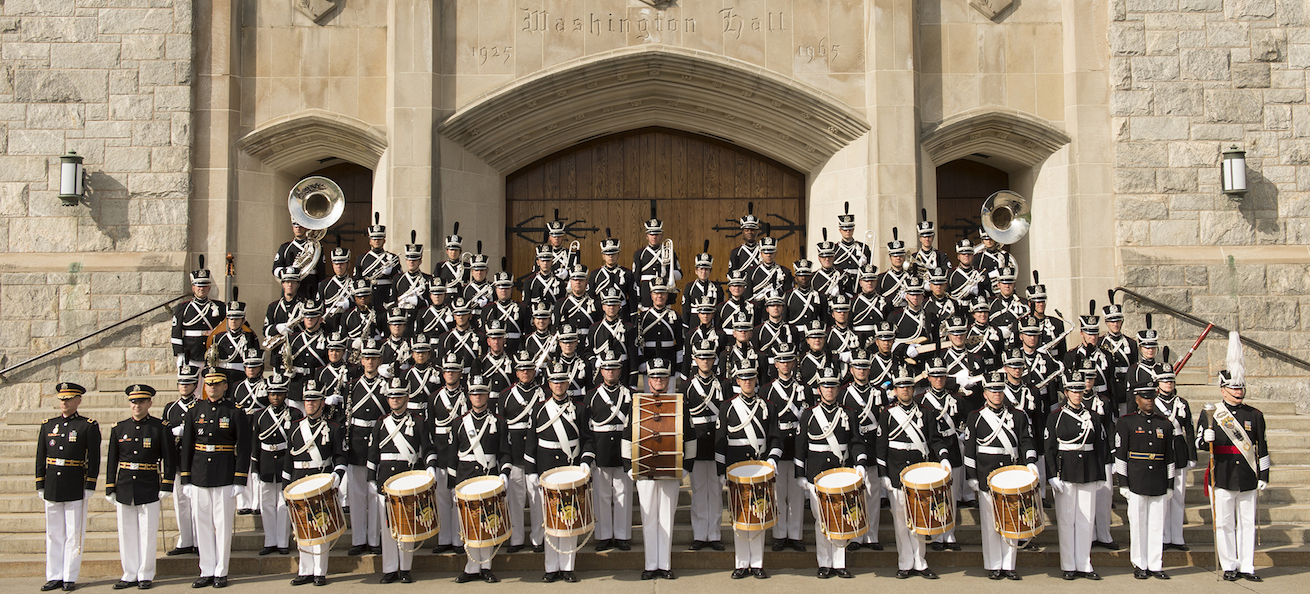
The West Point Band is the U.S. Army’s oldest active-duty band and the oldest unit at the United States Military Academy.
The West Point Band can trace its roots back to when fifers and drummers were stationed within companies of Continental Soldiers on Constitution Island, just across the Hudson River from West Point. In 1778, Brigadier General Samuel Holden Parsons and his brigade crossed the icy Hudson River and climbed onto The Plain at West Point. Since that day, West Point has been occupied by the United States Army, and soldier musicians have been ever present.
An act of Congress (the Military Peace Establishment Act) issued on March 16, 1802 directed that a corps of engineers be established and stationed at West Point which would constitute a Military Academy. This act formed the Regiment of Artillerist which included four military musicians, the first officially assigned musicians to the United States Military Academy. The band as a unit received its official authorization from the Department of War on June 16, 1817.
-
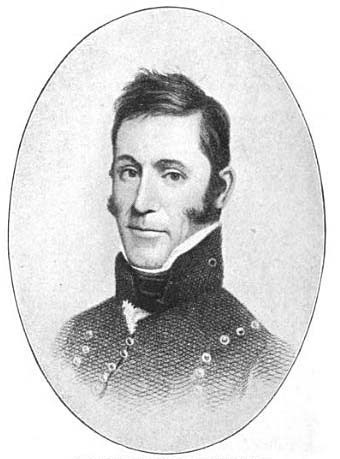 Alden Partridge (1785-1854) – 1806 West Point graduate and USMA Superintendent from 1814-1817.
With the establishment of the United States Military Academy in 1802 came an increased demand for military music. It needed fifers, drummers and buglers to drill the cadets and regulate their daily duties. On April 15, 1802, Jonathan Williams the first Superintendent of the United States military academy set down his desire to have a professional band at West Point with two Teachers of Music (TM) of the enlisted rank.
The band at West Point began with two attached musicians to do the various formations which required musical support. Musician Francis Masi (promoted to the first Teacher of Music) and his brother Vincent Masi were the first documented Field Musicians assigned to the Military Academy, being hired on February 28, 1803, in accordance with an Act of Congress.
By 1809, young men of enlistment age were being recruited or transferred to West Point as musicians. John Babbitt, a fifer, had been Company Fife Major at the 6th Infantry Band School on Governor’s Island and was most likely one of the first Army trained musicians transferred to West Point. West Point’s role as a professional military school further solidified during the War of 1812, and the need for a professional band became essential for military drill. To that end, Captain Alden Partridge’s Company of Vermont Militia from Norwich, Vermont formed the core of The Company of Bombardiers, Sappers, and Miners at West Point by an Act of Congress on April 29, 1812.
Among them, four musicians were listed: Joseph Roberts, Eleazar Smith, Joab Young, and Silas A. Robinson (West Point’s first known Drum Major). These soldiers were the first example of a complete West Point band of martial music.
By 1815, the instruments and band uniforms ordered by Alden Partridge had arrived. Orders selected musicians, arranged for their training at the 6th Infantry Band School at Governor’s Island (New York City), and attached them to West Point. By April of 1816, the band was fully staffed for professional concerts and parades. Within two years of its formation, the military band at West Point was touring the East Coast and fostering West Point’s image as a major tourist attraction, preceding the formation of the New York Philharmonic by twenty-five years.
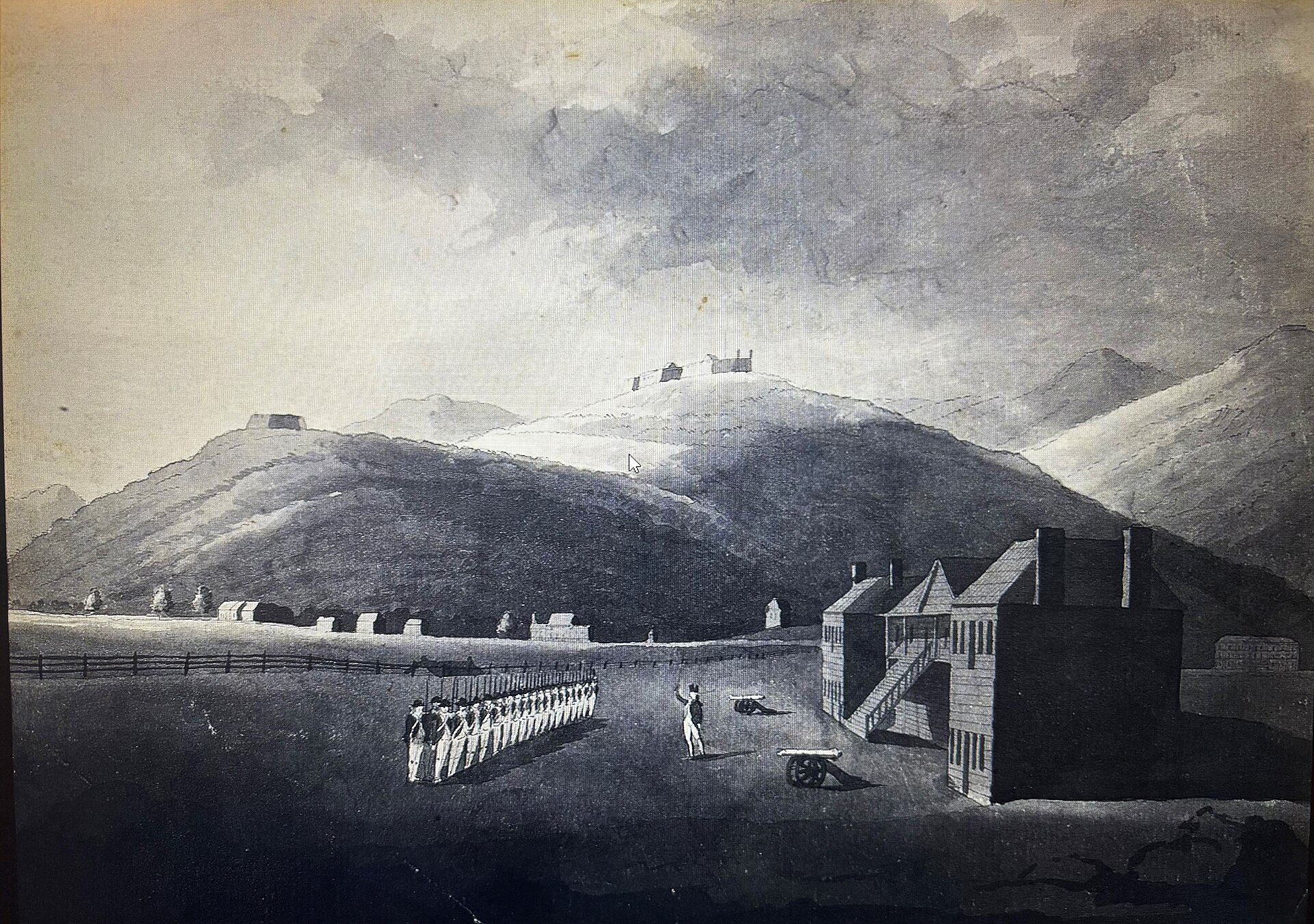 West Point. Painted in 1800 by an unknown artist. (Source: West Point Museum, Art Collection)
 -
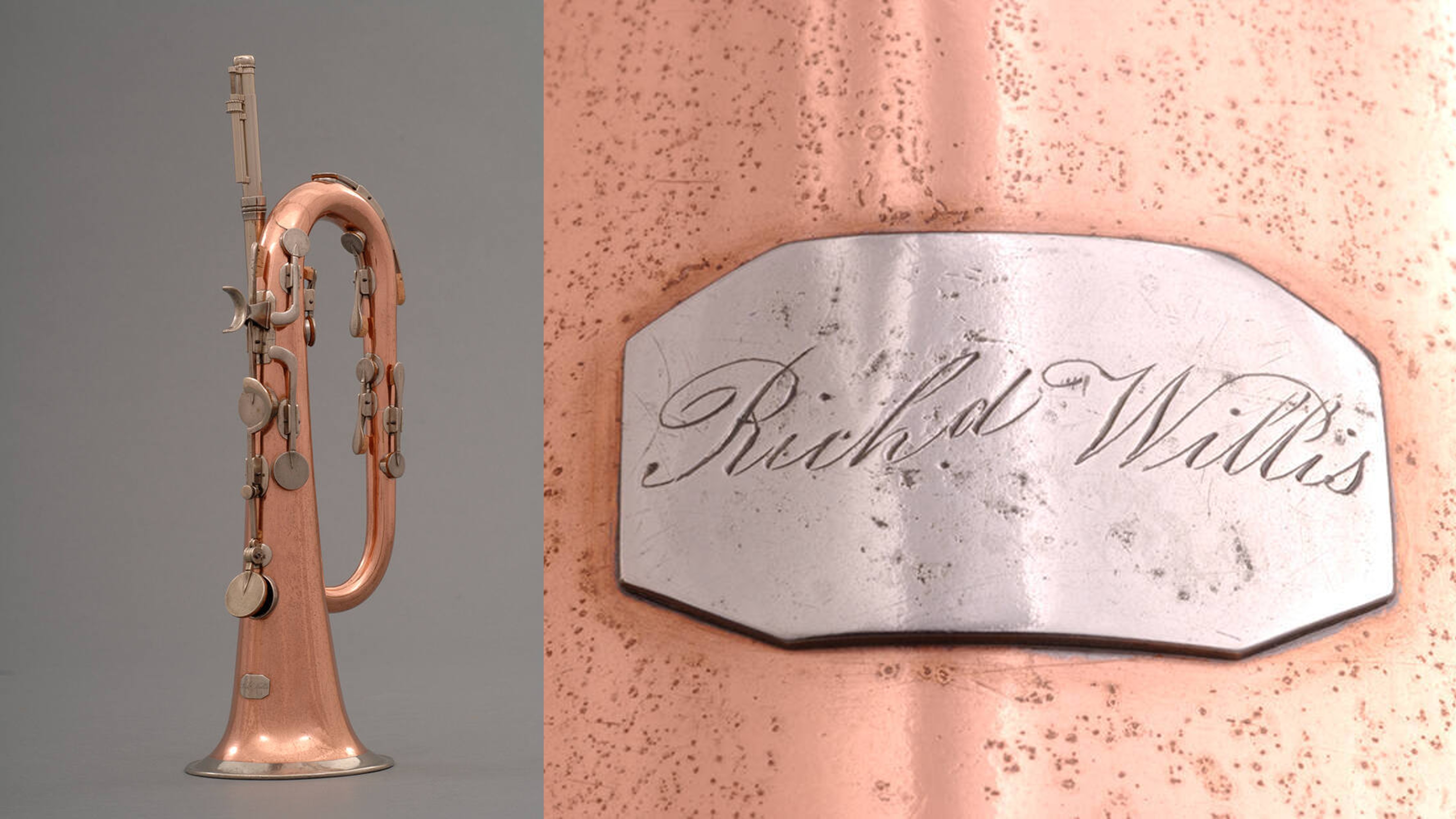 Based on the inscription on the name on the bell, the presumed original owner of this keyed bugle was Richard Willis (1790-1830). Willis was the first full-time teacher of music, bandmaster, and composer at West Point. (The collection held at the National Music Museum, South Dakota)
By 1817, leadership for the West Point Band was granted to a civilian with the rank, pay, and benefits of a major. This uncommon honor and the title of “Teacher of Music” was granted by the Secretary of War and later approved by Congress to Irishman, Richard Willis.
Mr. Willis developed his skills as a military bandsman in his native Ireland, immigrating to New York City in 1816. He was an accomplished instructor of all band instruments but was best known for his skill on the Kent Bugle (or Keyed Bugle), an early chromatic keyed brass instrument. His appointment as Teacher of Music established the group’s elite status early on. Through a regimen of daily rehearsals and a busy performance schedule, Willis honed the musicians into a polished ensemble.
During Willis’ tenure as the band’s leader (and until his death in 1830), the band would perform for presidents, leaders, visiting dignitaries to West Point, crowds in New York City (and other cities like Boston and Philadelphia), and alongside the Corps of Cadets.
During this period, the ensemble was performing on a full range of instruments. The first official band muster roll, taken in 1817, included one bassoon, two flutes, one keyed bugle, five clarinets, two French horns, one trumpet, one trombone, seven fifes, and one drum.
Throughout 1817, Richard Willis led the band in many documented performances; for President James Monroe’s first official visit to West Point to inspect the military facilities, in New York City at the Scudder Museum, for funerals at the West Point Cemetery, a ceremony ordered by Sylvanus Thayer to unveil the new Wood Monument, concerts on the Hudson River, cadet exercises on academy grounds, and the much-loved annual outdoor concerts at the ruins of Fort Putnam.
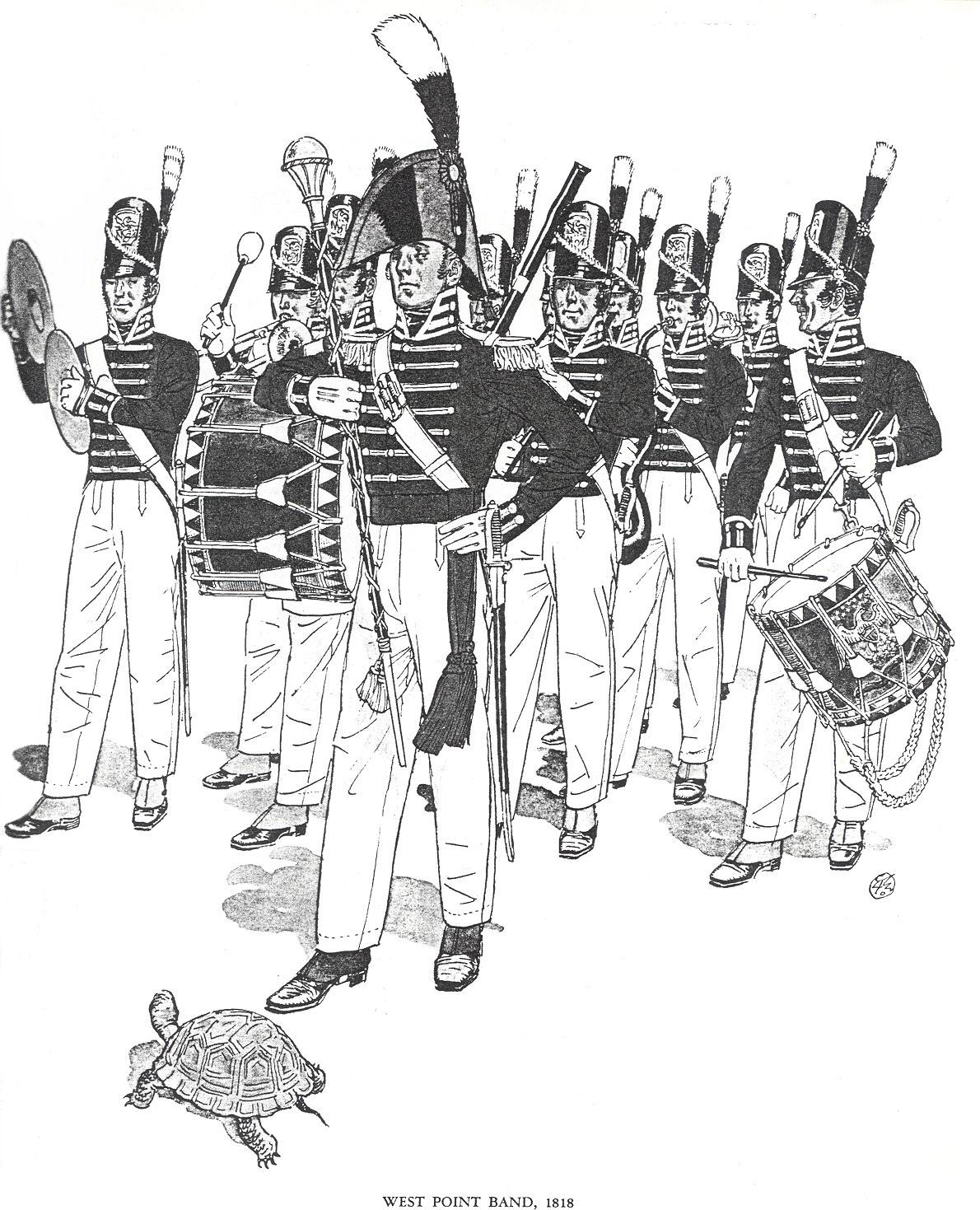 The West Point Band as it could have appeared in 1818. Illustration taken from “Cadet Grey: A Pictoral History of Life at West Point” 1955.
 -
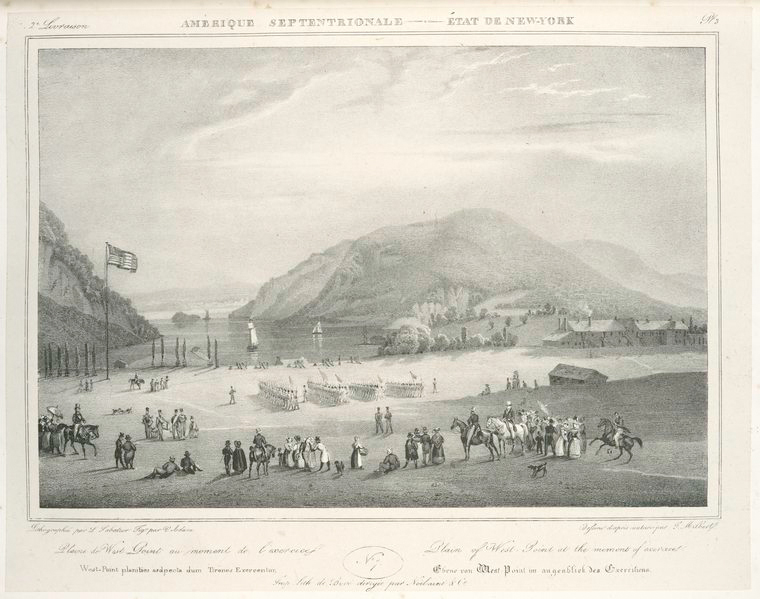 West Point Band in 1826 performing music during cadet exercises. Band is visible on the left side. Lithograph by Milbert.
By 1820, the band led by Willis performed a regular concert series at West Point for cadets, tours, and visitors. Cadet diaries of the time document that the audiences had their favorite pieces performed at these concerts: “Hunter’s Chorus” from Der Freischutz, a piece called “The Nightingale” which featured flute players from the band playing from the trees, and an Irish folk tune arranged by Willis for band entitled, “Oh! Mary when the Wild Wind Blows.” Some of these pieces were probably performed in August of that year for a special concert in New York City Harbor for the U.S. Secretary of State (and later 6th President), John Quincy Adams.
Under Superintendent Sylvanus Thayer, the cadets accompanied by the band undertook numerous summer marches (or “campaigns”) as a method of garnering good will towards the Academy. Hugely successful by all accounts, the cadets were greeted by the enthralled citizens of New York City (1816, 1817, 1819), Philadelphia (1820) and, the most famous march, Boston (1821).
On July 20, 1821, the Corps of Cadets boarded steamboats to Troy, NY and from there began the 170 mile march to Boston, arriving on August 7th and establishing “Camp Hamilton” on Boston Common. Numerous tours, galas and visitations were held during the two week stay, and the USMA Band figured prominently, even performing for former President John Adams. Bandmaster Willis reprised the President’s old campaign song, Adams and Liberty, by then a popular tune known to the younger generation as The Star-Spangled Banner.[7]
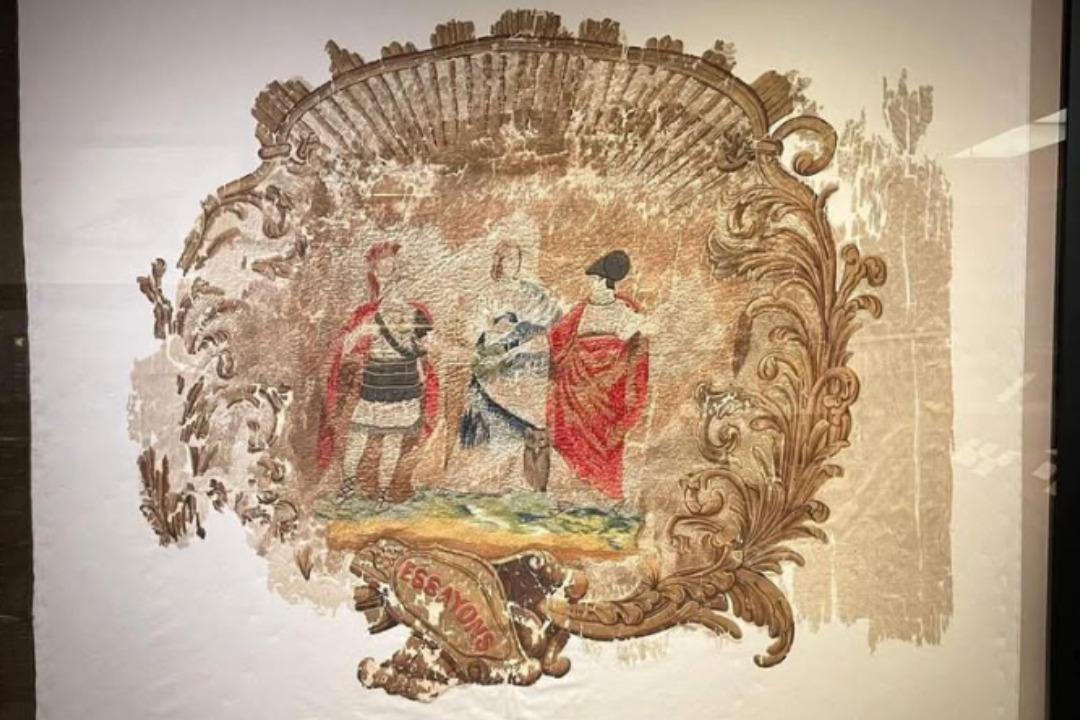 A flag issued to the Corps of Cadets, patterned after the flags given by the City of Boston in 1821 during the Boston campaign. The motto, “Essayons,” is the slogan of the Corps of Engineers, the branch of the Army that administered West Point in 1821. (The collections at the West Point Museum)
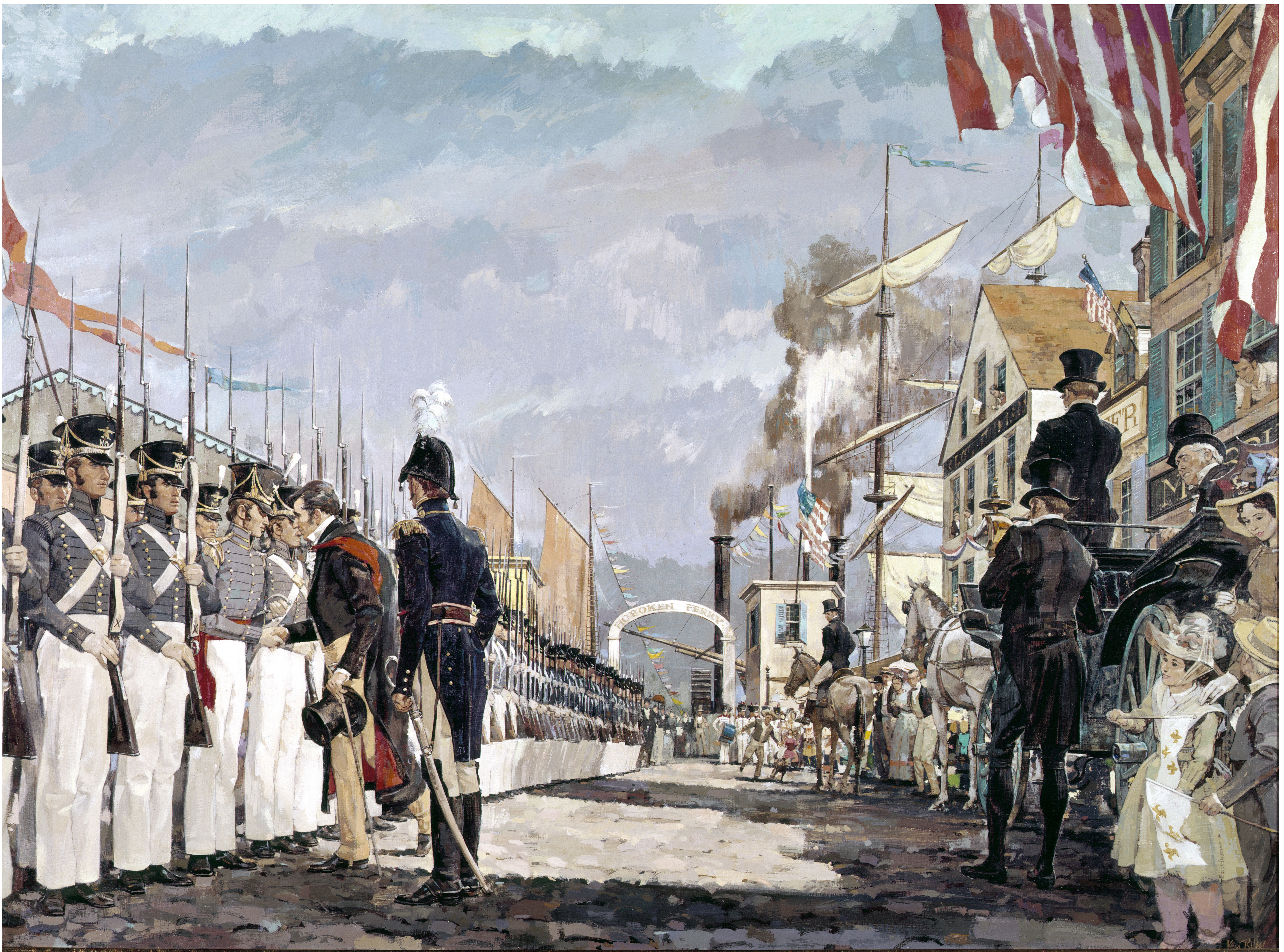 Painting of Lafayette’s 1824 visit to New York by Ken Riley. West Point Band in its distinctive red and white uniform visible in the background.
In 1824, Willis and the West Point Band had yet another historic experience when General Lafayette, hero of the Revolutionary War arrived in New York Harbor aboard the ship Cadmus. The beloved Frenchman was a hero to Americans for his victories at the battles of Brandywine, Monmouth, and Yorktown.
Mr. Willis and the Band took part in at least four major receptions around New York City which honored the distinguished guest. They greeted Lafayette on his arrival off Staten Island on August 15, 1824. They were at Fort Lafayette at the harbor when Lafayette inspected that site on September 6, 1824. They played the reception in Castle Garden on September 14, 1824, and they were on hand to welcome Lafayette to West Point when he stepped ashore to pay his respects to the institution he styled our “bulwark of national defense.” Willis and his musicians may even have been aboard the Cadmus during Lafayette’s travels to upstate New York.
Richard Willis also wrote music celebrating the opening of the Erie Canal on October 26th, 1825. The work, The Grand Canal March was well received in its day and is still to be found in U.S. music collections throughout America. Willis’ Grand Canal March was premiered by him and “his elegant band of music” during final ceremonies marking the waterway’s opening. This first performance was heard toward the close of a fortnight’s festivities ending a nine-year project that brought unprecedented growth and prosperity to northern New York State and made New York Harbor the most significant port on the eastern seaboard. Participants enjoyed civic salutes that included processions, speeches, entertainment, the firing of cannons, and countless bonfires.
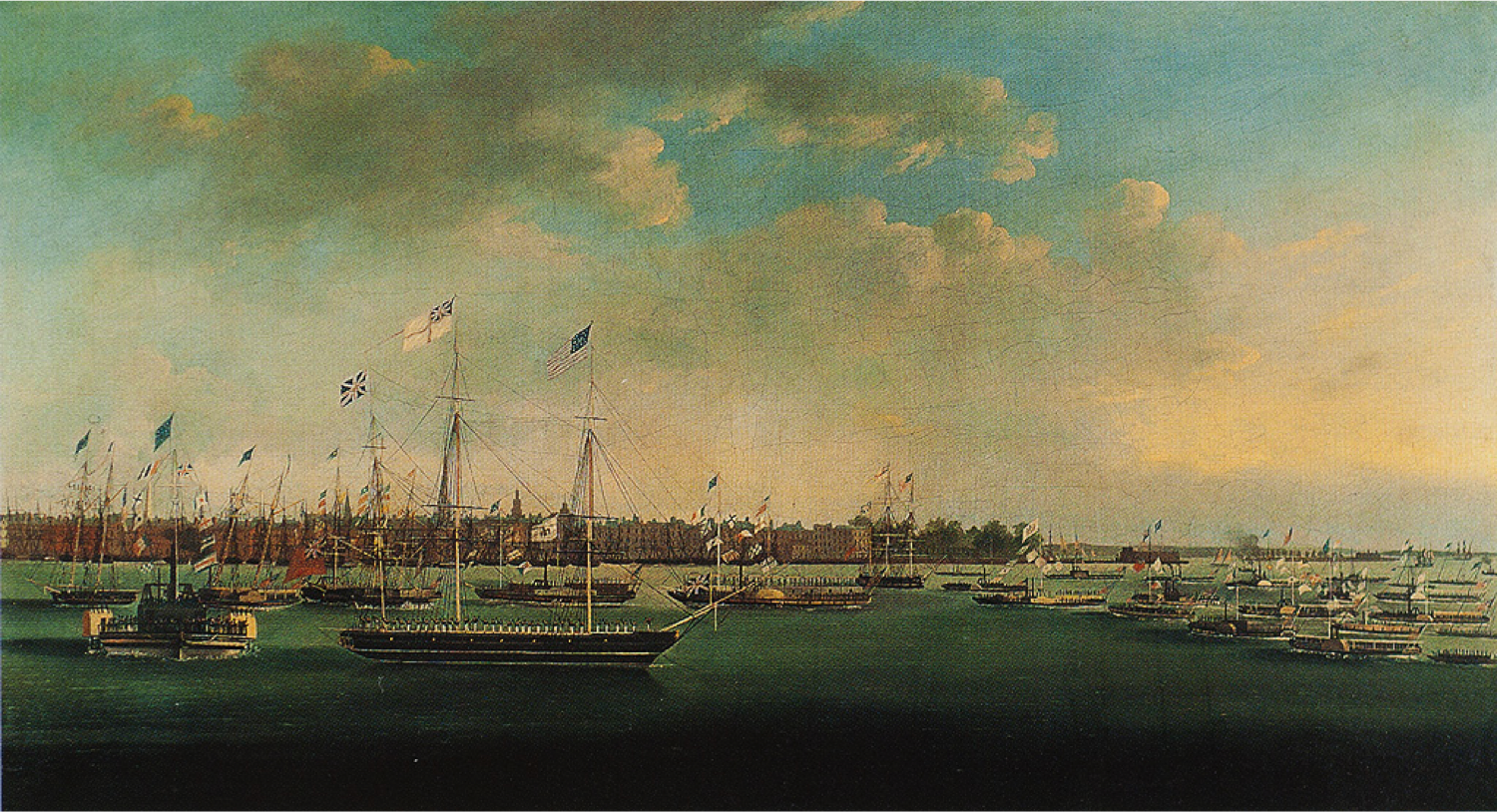 “Erie Canal Celebration, New York, 1825” by Anthony Imbert (1795–1834)
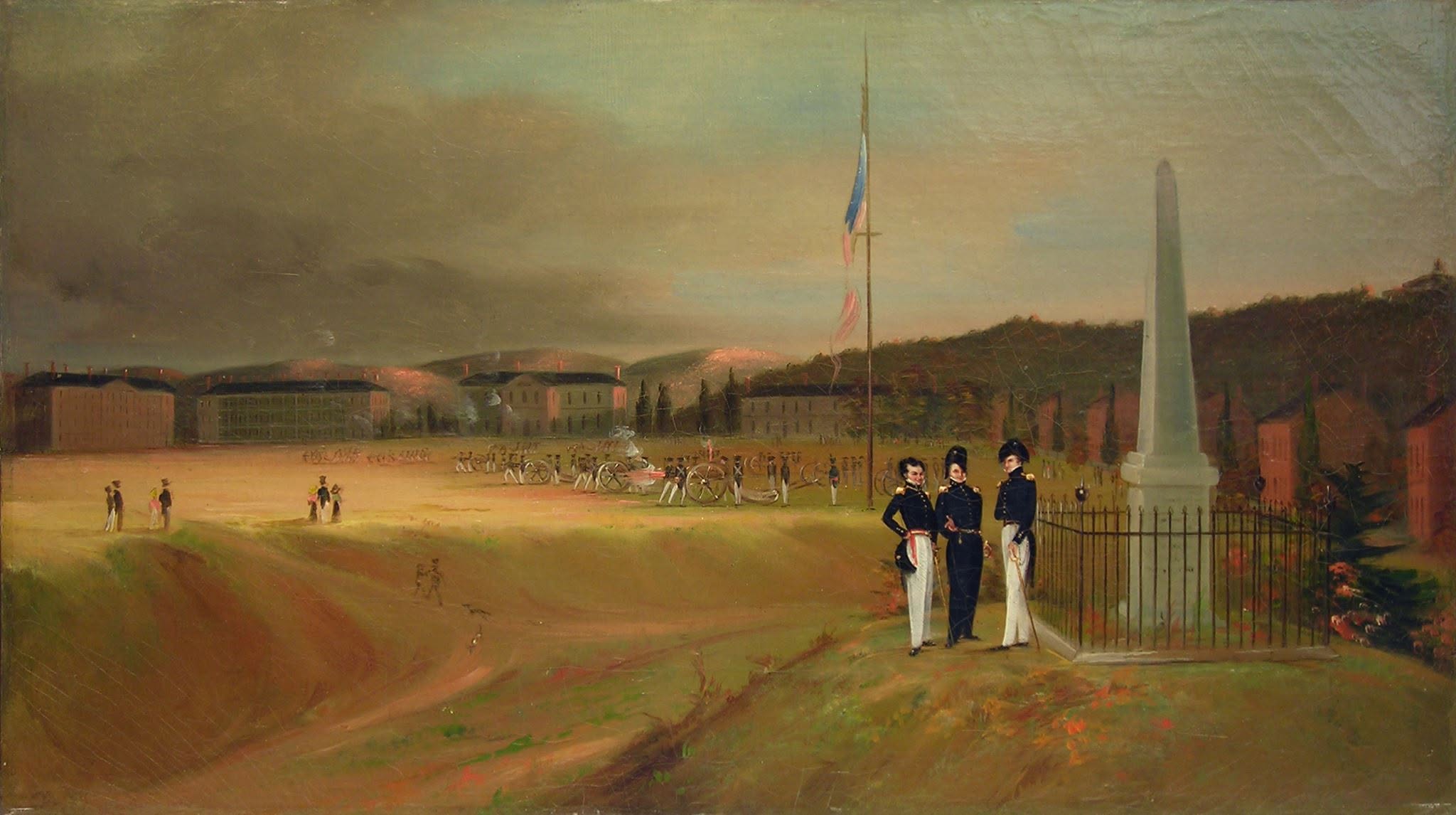 “West Point Military Academy” by George Catlin circa 1830. Courtesy of the West Point Museum Collection. This painting is one of the earliest depictions of the United States Military Academy. Since no image of Richard Willis exists, this painting gives us some idea of the world he inhabited.
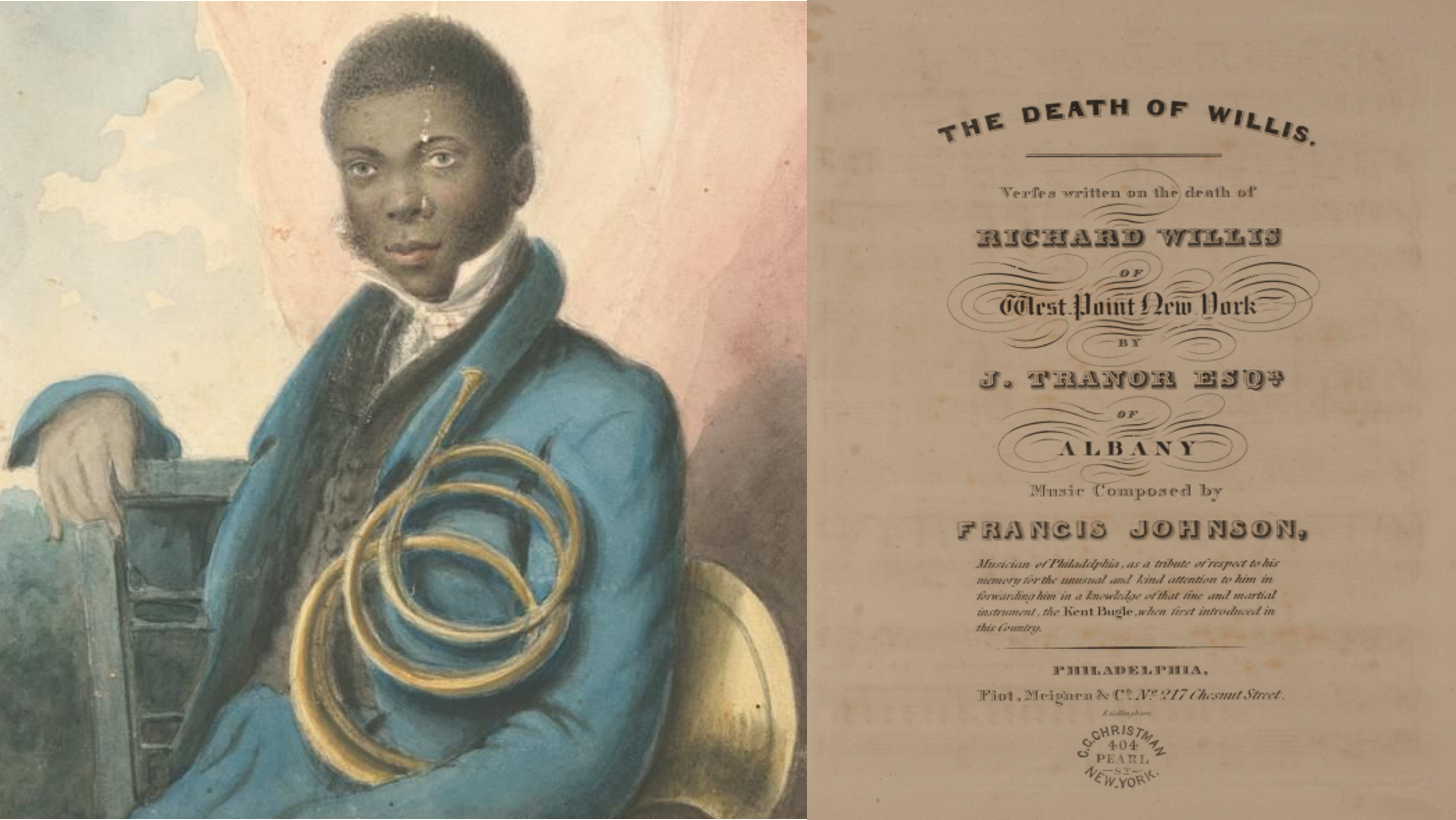 Francis Johnson (1792-1844), renowned keyed bugle player and composer. Johnson composed “The Death of Willis” in honor of Willis after his sudden death in 1830
Richard Willis passed away suddenly on February 1, 1830. He was interred at the West Point Cemetery with full military honors at 3 o’clock on February 3rd. The weight of his passing suspended all academic exercises by order of Superintendent Thayer. In his letters, Daniel B. Whiting wrote on February 22, 1830:
“I suppose you have met with the news of the death of Willis, our justly celebrated musician. He is extremely regretted here on account of his talents and will always be so by those who have once heard his soul inspiring bugle and hoped to listen to it again. He was buried with military honors, having long and honorably in the service of the government. I was one of a few who was discharged a volley over his grave. Nothing is so grand nor so imposing as a military funeral. The procession with reversed arms, moving to the music of the Dead March, the muffled drums, the noiseless multitude, the stern voices of the officers uttering the words of command, the roaring of the muskets, the last echoing from mountain to mountain until it reduces to a whisper and is gone. Suddenly, the stillness and the awe which possesses every breast is broken, the procession returns with the liveliest tunes, and flying colors.”
Willis’ compositional legacy lives on in his beloved songs inspired by life at West Point. Chief among these is “The Dashing White Sergeant,” which is still performed today and featured in the West Point Graduation March.
He also played a key role in the development of one of America’s most influential musical figures, Francis Johnson. In fact, Johnson held Willis in such esteem that one of his most famous compositions, a tribute called “The Death of Willis,” begins with an inscription stating: Music composed by Francis Johnson, musician of Philadelphia, as a tribute of respect to [Willis’] memory for the unusual and kind attention to him in forwarding in him a knowledge of that fine and martial instrument, the Kent bugle, when first introduced into this country.
-
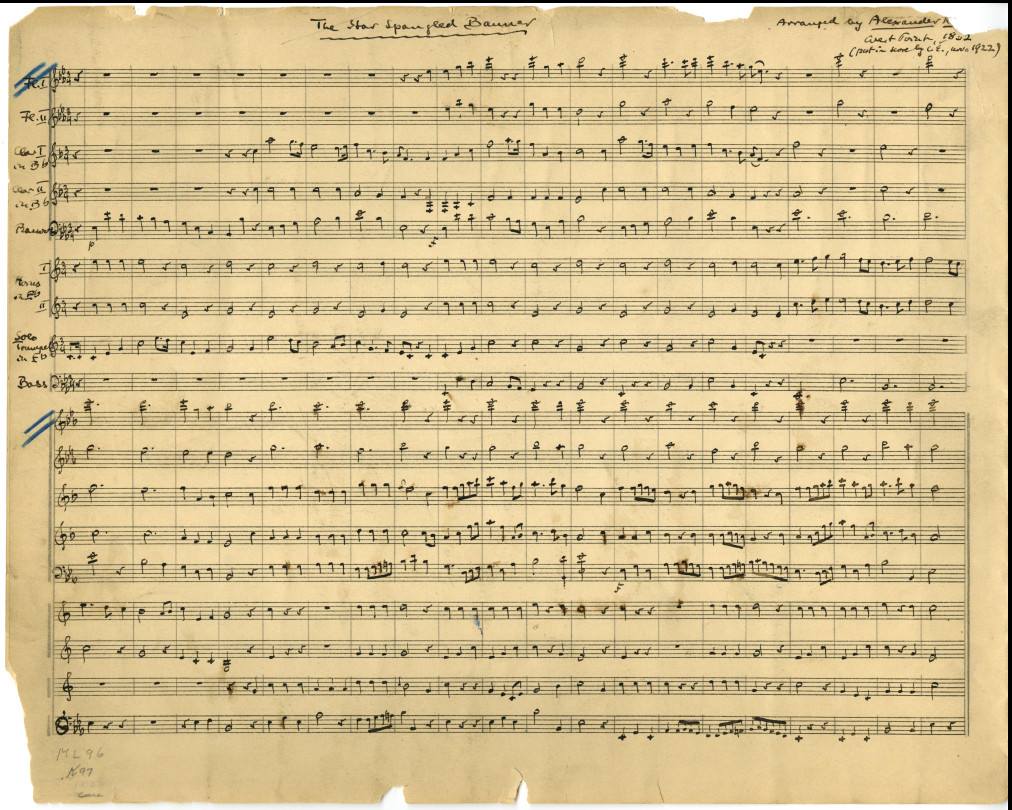 Alexander Kyle’s 1832 arrangement of “The Star Spangled Banner” written for the West Point Band. Found in the Library of Congress.
The next 13 years following the death of Richard Willis would see a quick succession of three new teachers of music at West Point; Alexander Kyle (1830-1833), Joseph Lucchesi (1843-1840), and James Kendall (1840-1843).
Alexander Kyle succeeded Richard Willis as Teacher of Music in 1830, serving for almost three years. He was an accomplished composer, conductor, and arranger from New York City whose compositions are housed in the Library of Congress. His known works include two waltzes, a sarabande dance, and one of the very first band arrangements of “The Star Spangled Banner” arranged for the West Point Band in 1832.
During this period, the Band benefited greatly from it’s proximity to New York City. Not only from the pool of music directors, but from an increasing number of talented musicians from Germany, Italy and Ireland. These musicans were a part of the increasing flow of immigrant populations that entered New York during the 19th-Century. Beginning in the 1820s, only 129,000 passengers entered the United States from foreign countries, however that number swelled to roughly 540,000 by 1830. The Musicians in the West Point Band at this time reflected this new European diversity, many not speaking English as their first language.
Alexander Kyle was replaced by Joseph Lucchesi, Teacher of Music from 1834 to 1840. He is the first Teacher of Music who had previously served as an enlisted West Point Band musician. Lucchesi first appears on the Band’s roster in 1820, was born in Italy and was likely recruited by Richard Willis himself soon after his arrival in New York City.
Another individual, one Louis Pioni, also appears on the West Point Band rosters during this time. Although there is no firm evidence to validate this, Band tradition relates that Pioni, an Italian by birth, had been a military musician in Napoleon’s army during the Battle of Waterloo. He remained in the Band for a career and is interred at the USMA Cemetery.
During Lucchesi’s tenure, President Martin Van Buren visited West Point accompanied by General Winfield Scott and Secretary of War Joel Roberts Poinse. The president held a deep connection with West Point, as his oldest son was a graduate. There was great preparation for the visit which would occur following the President’s visit to New York City. During the summer of 1839, three boats arrived at West Point with the President and his guests. They were greeted by Superintendent Delafield, cadets, and the West Point Band who, together with the visitors, walked up the hill to the Superintendent’s house.
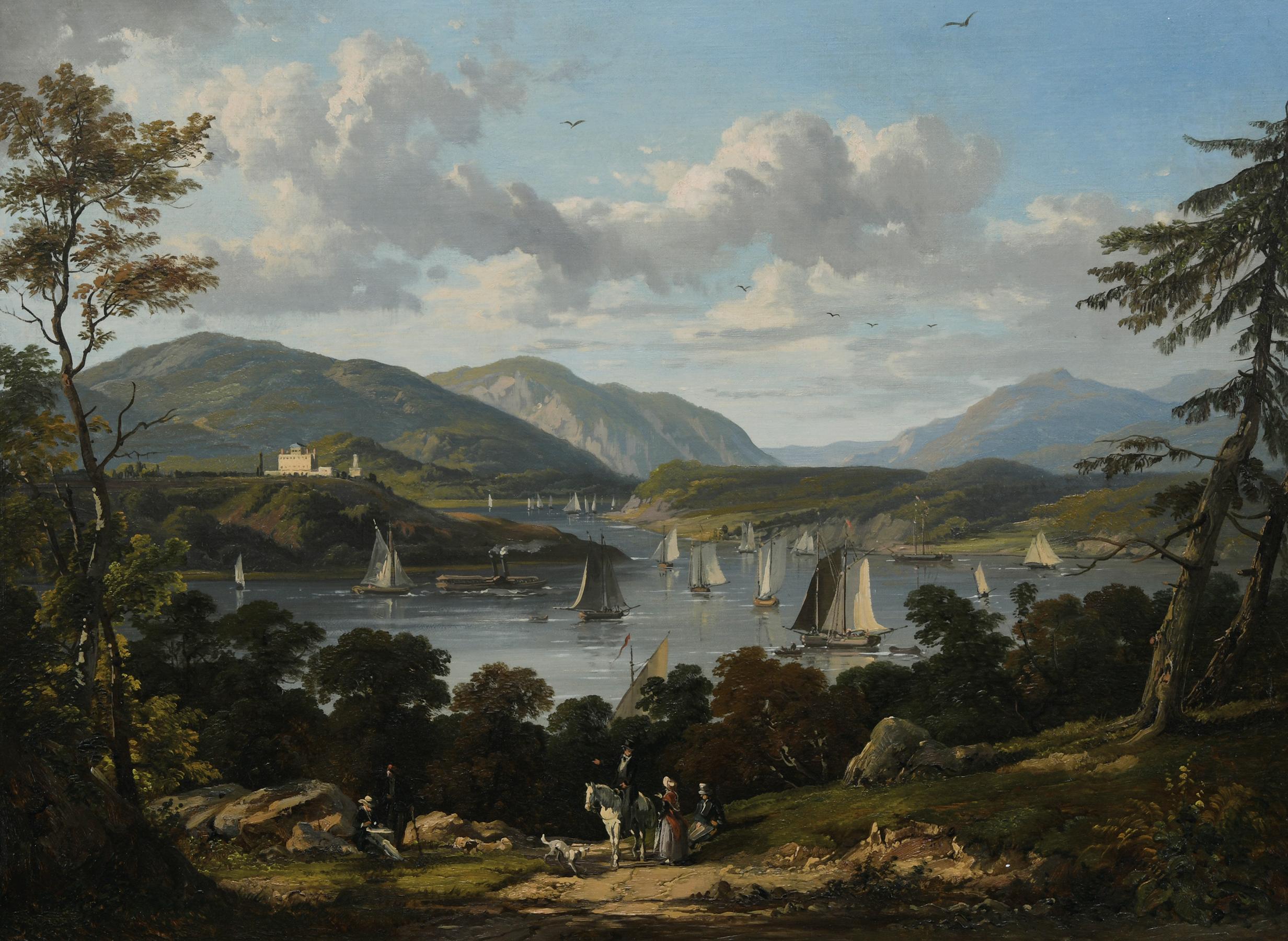 VICTOR DE GRAILLY, American 1804-1889, View of the Hudson River from West Point, c. 1840, oil on canvas. What West Point would have looked like during the command of Joseph Lucchesi.
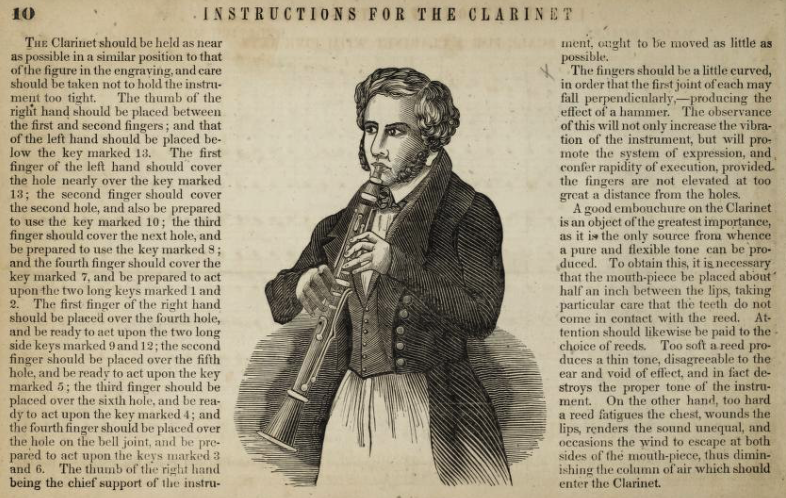 Image of clarinetist in James Kendall’s “Clarinet Instruction Book: A Complete School for the Clarinet” published in 1845. A possible clue to what Kendall may have looked like.
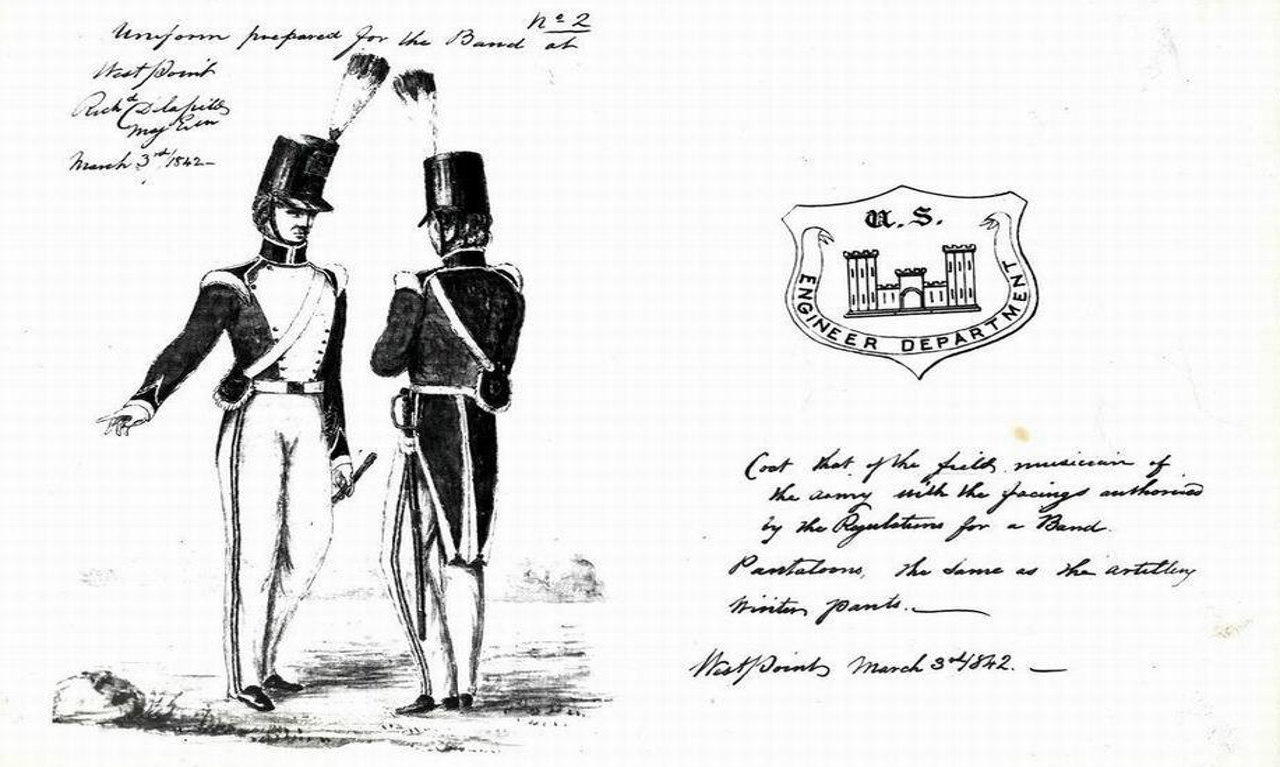 A proposed uniform for the West Point Band in 1842.
James Kendall (1803 – 1875) is often confused with his younger brother, Edward ‘Ned’ Kendall (1808 -1861), the celebrated virtuoso of the keyed bugle. However, James himself was also known for his virtuosity on the clarinet and as a band leader. James directed the West Point Band from 1840 through the spring of 1843
In 1826, at the age 23, James Kendall was also known as a leader of the renowned Boston Brigade Band and remained in the position through 1827. He had also been a clarinetist in the Boston Brigade Band. It should be noted here that the future icon of the band world, Patrick S. Gilmore, directed the Boston Brigade Band in 1852 and again in 1859.
James Kendall’s term with the West Point Band would also be relatively short as he would move on after three years to resume a career with theater orchestras. But there were events worthy of mention during his brief time in the Hudson Valley after decades in Boston. At Kendall’s arrival, the Academy Band numbered 24 musicians in January 1840 with a Corps of 249 Cadets. Cadet James Schureman, editor of the Cadet publication, The West Pointer wrote on January 24th, 1841:
“But nevertheless we do once in a while have something to break the monotony. On Saturday we have the sweet sound of music from our well organized band headed by Mr. Kendall, a brother of the celebrated bugler, and how sweet after poring for a week over a dry mechanics or optics does it fall upon the ear.”
-
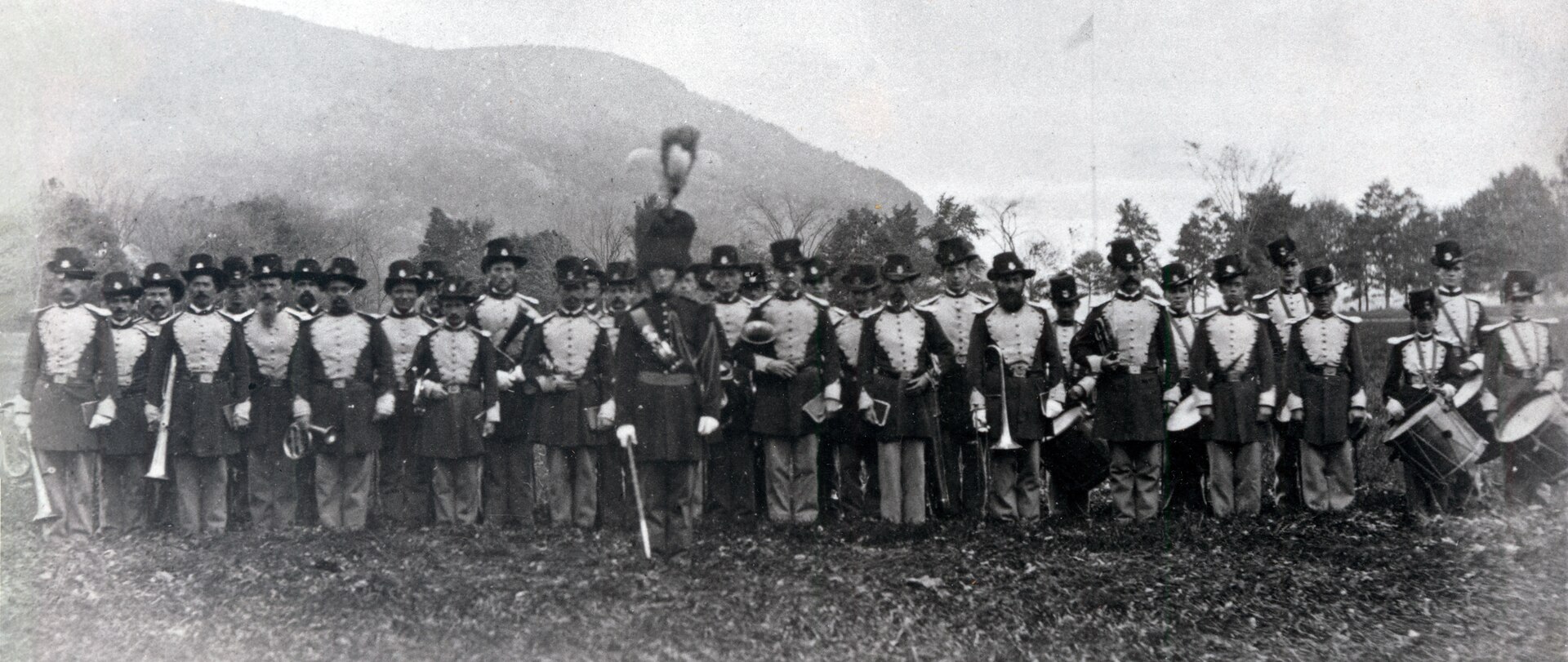 Earliest known photograph of the West Point Band. Taken circa 1857, under the command of August Appelles.
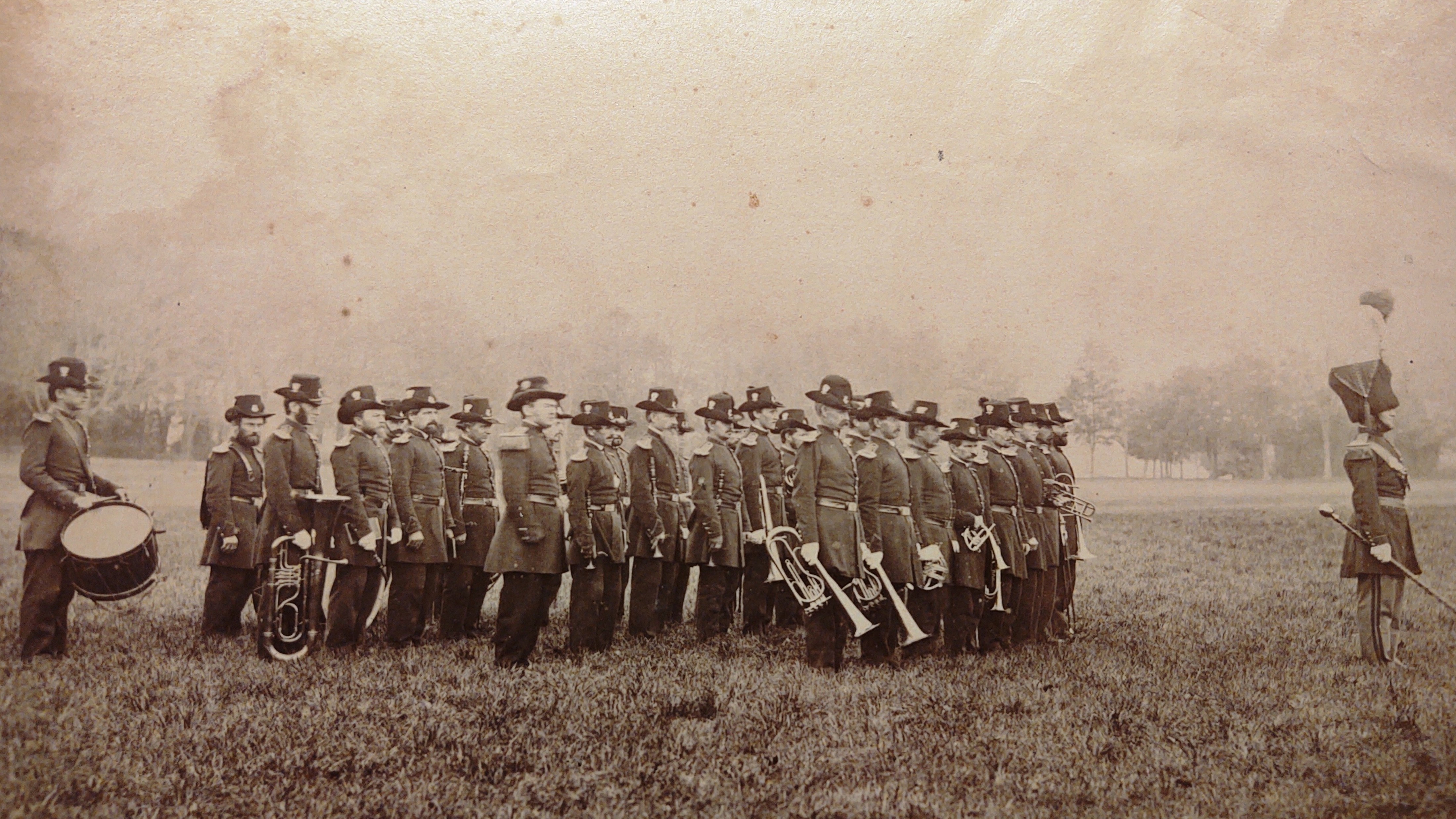 One of two known photographs of the West Point Band taken in 1865.
Soon after the departure of James Kendall, West Point would mourn the deaths of President Taylor and the band’s first supporter, Alden Partridge. The Teacher of Music during this time would found himself in hard times, often performing two or more full-time jobs in an effort to keep from being destitute. Augustus Appelles served as Teacher of Music for nearly thirty years in this period, from 1843–1872. His humble tenure spanned the careers of some ten superintendents. Apart from his duties leading the band, Appelles was widely known for his compositions, arrangements, performances on violin with the Band, and his work as a full-time Post Organist at the West Point Chapel.
During the Civil War, the band would continue its primary duties performing for Cadet training, drill, and military ceremony. One enduring story involving Appelles and the band occurred in June of 1862. President Lincoln visited nearby Highland Falls and West Point to visit General Winfield Scott. To honor the president, the band performed an after-midnight concert at the Cozzens Hotel in Highland Falls during a pouring rain. President Lincoln is said to have slept through the music. However, President Lincoln was kind enough to personally thank Appelles in written correspondence dated February 7, 1862.
Following the Civil War, the band performed for President Ulysses S. Grant’s first presidential inauguration parade in 1868, although there is no surviving material evidence. It is completely confirmed through correspondence that the band was also present at his second inaugural parade in 1873. This is the first known Inaugural for both the Band and the Corps of Cadets. In addition to this, the Band performed for Prince Alexis of Russia in 1871.
Augustus Appelles retired from army service in 1872, appointing Teacher of Music Charles Rehm. Rehm would serve as the band’s leader from 1872 to 1887 during a period of austerity and high turn-over. However, even under severe budget restraints, the band was still able to perform for important historical events. In 1876, the band performed for the United States Centennial Exposition in Philadelphia, PA. The Philadelphia Exposition was the first official world’s fair in the United States, celebrating the 100th anniversary of the Declaration of Independence and showcasing American industrial and cultural achievements.
In 1877, the Band performed for the internment of General George Armstrong Custer at the West Point Cemetery. The band also marched in the funeral parade for General William Tecumseh Sherman in 1891 in New York City and for the Funeral ceremonies of Ulysses S. Grant in 1885. For President Grant, the band performed as the Corps of Cadets rendered their final respects as the funeral train stopped at West Point one final time.
1890 marked the first ever Army-Navy football game, which the band supported with music. This tradition continues to the present day, as the Corps of Cadets march onto the field for the opening review ceremonies and also throughout the game in the stands. The band also performed at the famed Chicago and Louisiana Purchase (St. Louis) Expositions in 1894 and 1904.
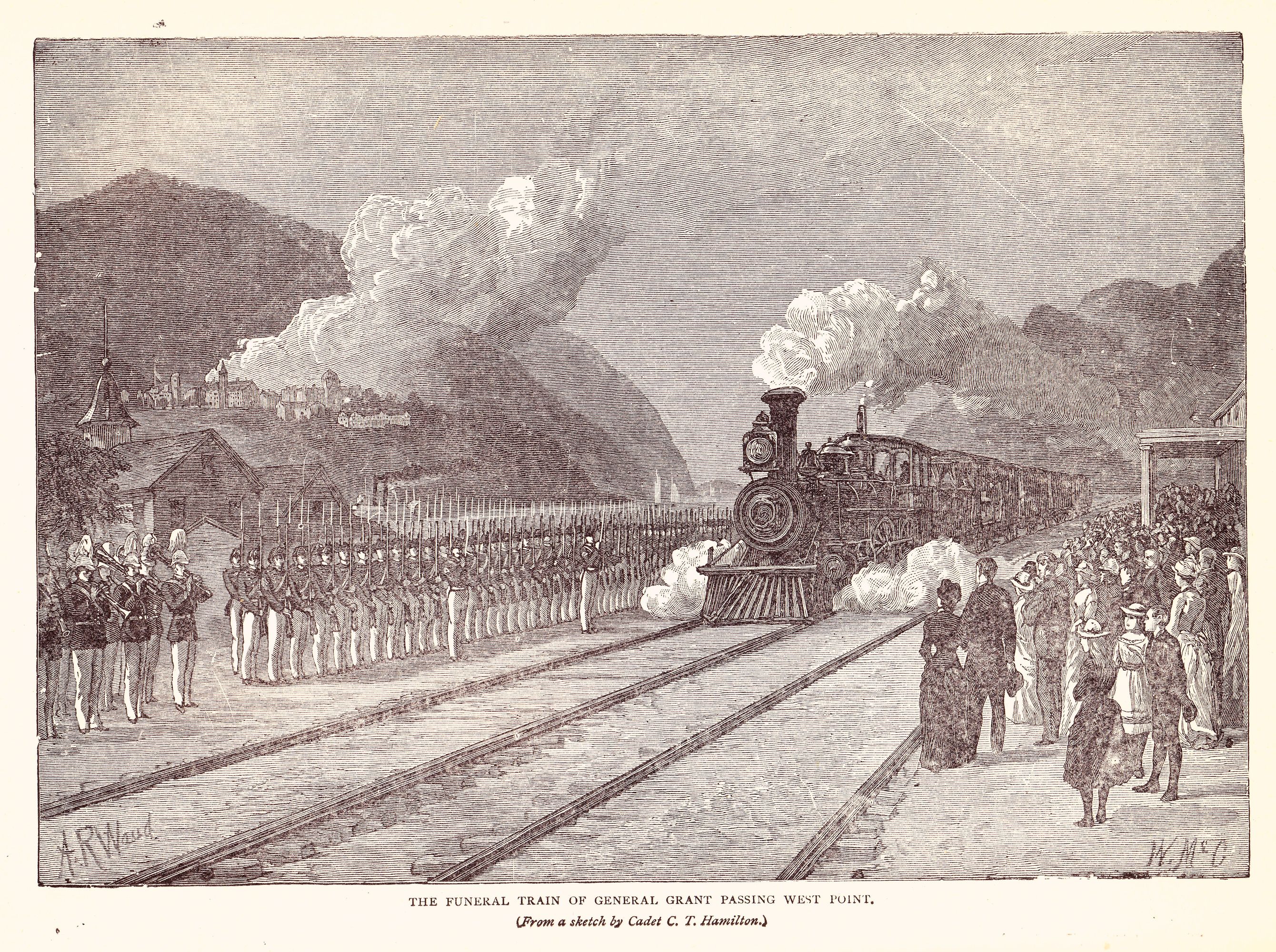 Sketch of Grant’s funeral train passing through West Point in 1885. Band is performing to the left of the cadets.
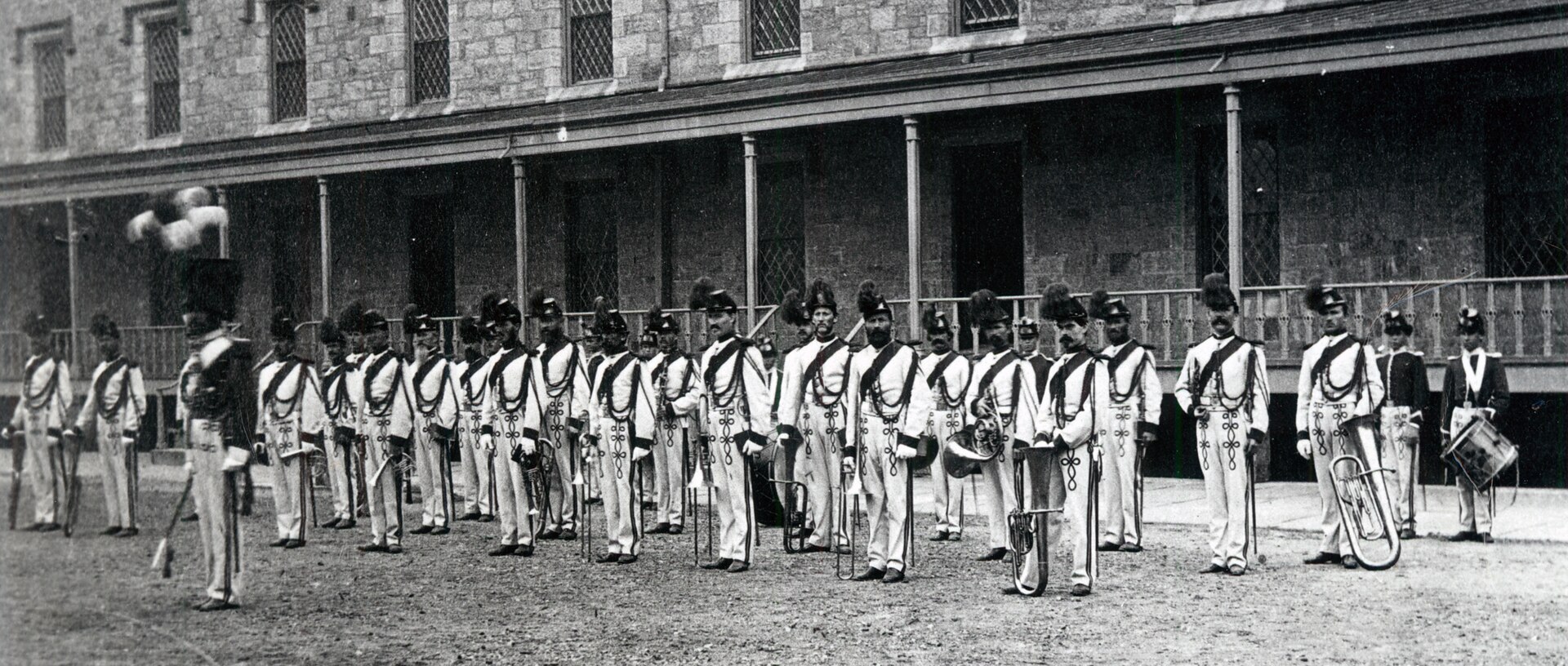 USMA Band in front of Cadet Barracks. 1890.
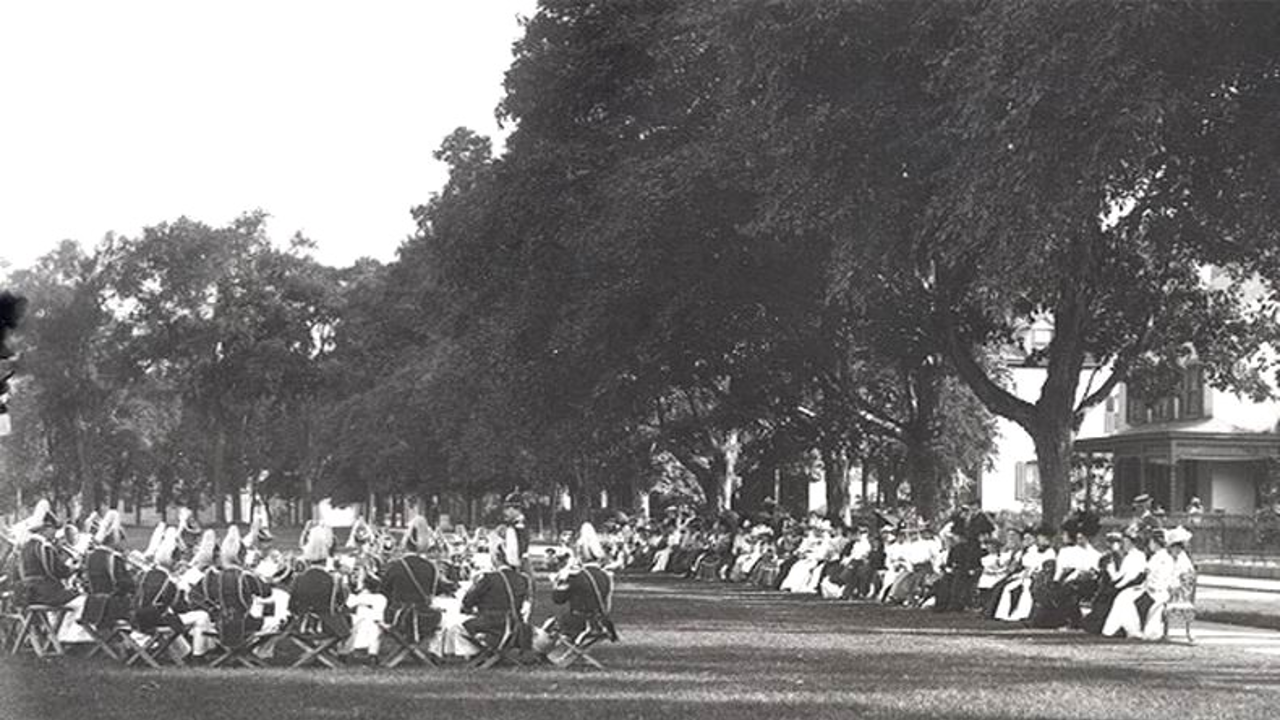 Band in 1889 seated in a ‘serenade’ band setup across from the Superintendent’s Quarters.
 -
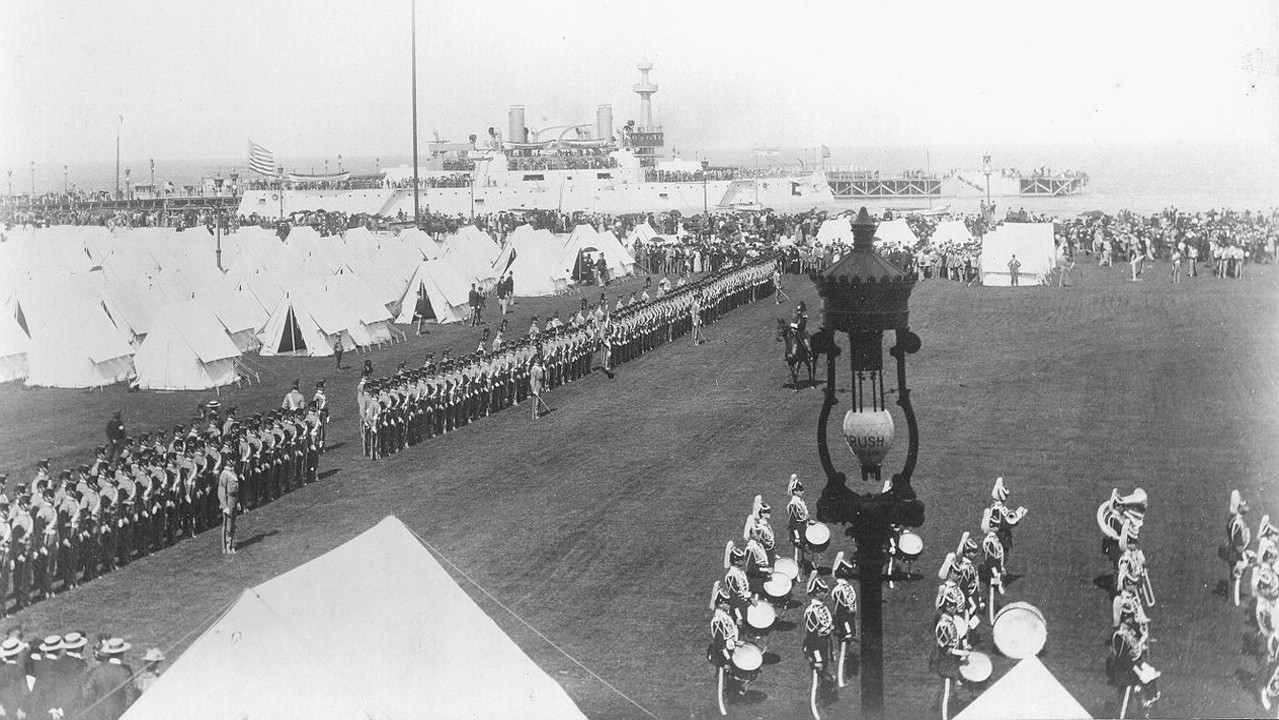 West Point Band performs with the Corps of Cadets at the 1894 Chicago World’s Fair.
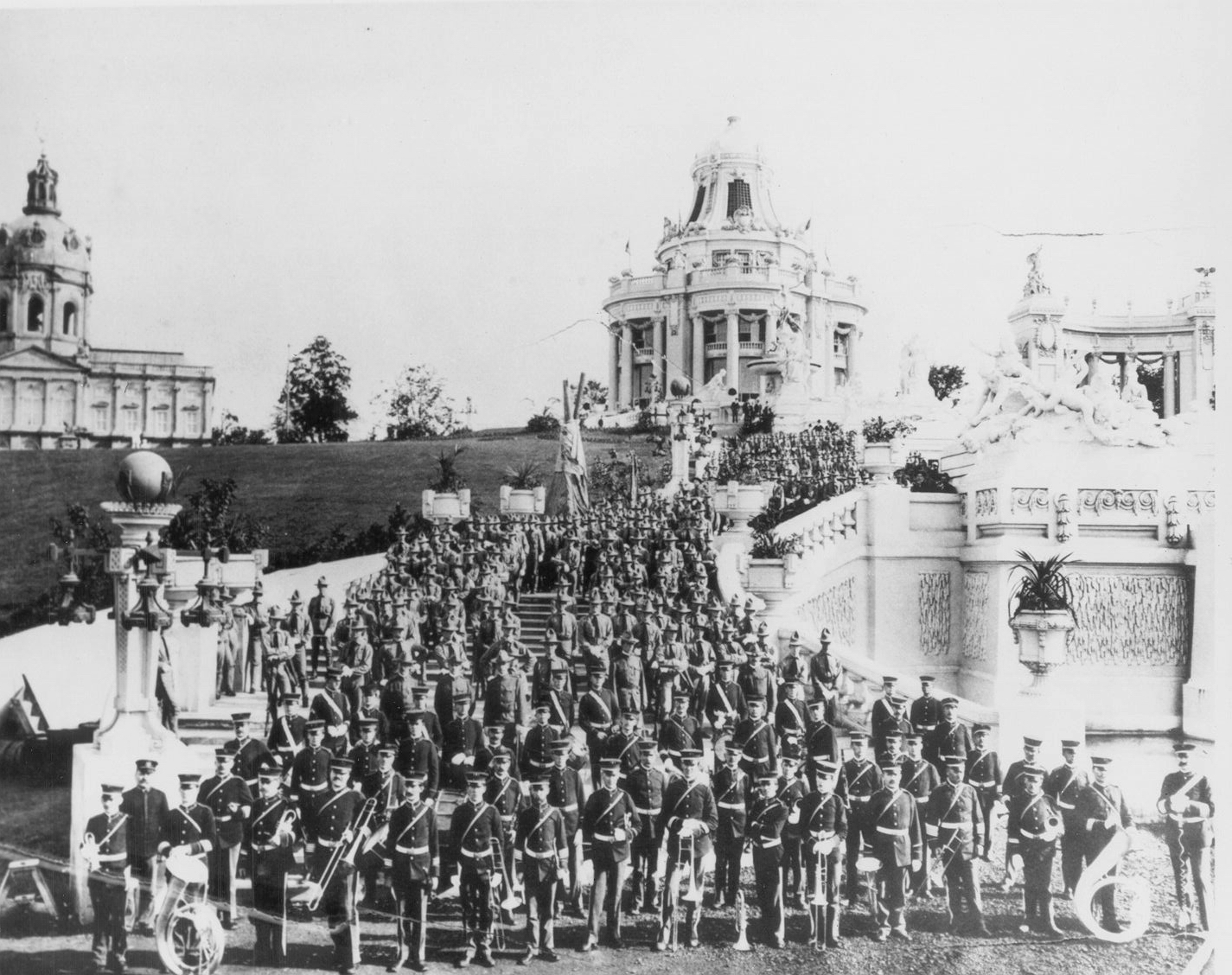 USMA Band at the 1904 St. Louis Exposition under the direction of TM Essigke.
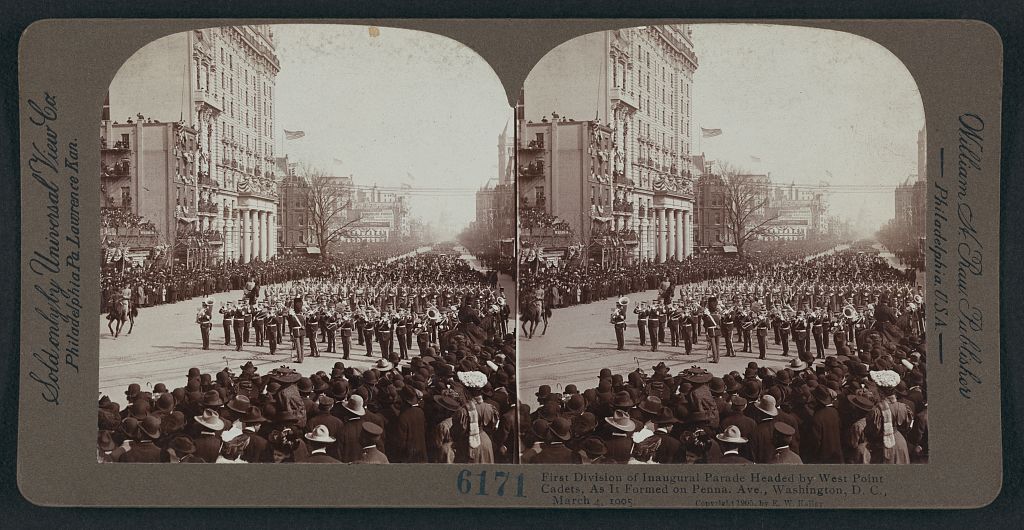 Band at the 1905 Inaugural Parade for Teddy Roosevelt.
By the turn of the century, the West Point Band found itself at new heights of popularity. Thanks to the work of famed composer, author, and band leader Arthur Clappe (Teacher of Music from 1888-1895). Under the baton of Clappe, the band performed throughout the country in support of important figures and national events such as the opening of the General Grant National Memorial in New York City and the World’s Fair in Chicago. By Clappe’s retirement in 1895, the band was nationally recognized and highly sought after for performances.
However, it was under the new direction of violinist and conductor George Essikge that the band was able to embark on its first national concert tour, traveling for an entire month from January 10th to February 4th, 1897. The band performed in places like Syracuse, Schenectady, Troy, Utica, Buffalo, Cleveland, Toledo, and ending in Detroit.
In 1904, the band traveled to perform at the St. Louis Exposition or World’s Fair. The exhibition was grand in scale and lengthy in preparation, totaling $15 million (equivalent to $538 million in 2025) in local, state, and federal funding. Exhibits were staged by approximately 50 foreign nations, the United States government, and 43 of the then-45 US states. These featured industries, cities, private organizations and corporations, theater troupes, and music schools. There were also over 50 concession-type exhibits throughout the park, showcasing new technologies, foods, culture, many different bands, and more.
Also under George Essikge, the band was selected to perform for the inaugural parade of President Theodore Roosevelt. The 1905 parade was the largest and most elaborate of all inaugurations up until this point and included some 35,000 participants. Included in the parade were military bands, Harvard alumni, members of the Rough Riders, Native American Chiefs, Coal miners, and much more. Of the Parade, the New York Times reported,
“Soon after the parade began, the marching of the West Point cadets and middies from the Naval Academy excited his (Roosevelt’s) admiration. ‘Those are the boys,’ he exclaimed, enthusiastically. ‘They’re superb.'”
The German-American conductor and musician Philip Egner was quickly appointed Director of the West Point Band and Teacher of Music at the Military Academy on June 17th, 1909, following the unexpected death of George Essigke on the May 28th. Egner was well respected within the New York City music scene, in fact Essikge and Egner were had most likely performed together in metropolitan theater orchestras. Essigke was a concert violinist, while Egner performed as a cellist. Both performed under famed conductors such as Anton Seidl, Walter Damrosch and Theodore Thomas.
Egner was destined to become one of the West Point Band’s most legendary and influential musical leaders. Long before arriving at the academy, Egner was a musical prodigy who played cello for the Metropolitan Opera and served as an Army officer during the Spanish-American War. When he was appointed director of the West Point Band in 1909, he immediately began leaving an indelible mark on cadet culture. In 1910, he partnered with the academy’s pep squad to craft a new spirit song to rally the corps.As the legend goes, while walking back to his quarters on post, Egner began whistling an improvised melody. Realizing the tune transformed the standard chant into a powerful, driving fight song, he quickly scribbled the musical notes onto his shirt cuff. This spontaneous composition became known as “On, Brave Old Army Team.” Today, “OBOAT” remains one of the academy’s most enduring football anthems.Years later, in 1927, Superintendent Edwin B. Winans commissioned Egner to compose the “Official West Point March.” Rather than writing a standard melody, Egner brilliantly wove together snippets of existing academy traditions, blending foundational military calls like Taps and Reveille with iconic school songs like Army Blue and The Corps. This historic piece still echoes across the academy today. It serves as a timeless musical anchor that is proudly performed at graduation ceremonies, cadet functions, football games, and concerts.During his tenure from 1909 until his retirement in 1934, Egner oversaw numerous significant developments within the band while also leading it in many notable events. The band performed at the Hudson-Fulton Centennial Celebration in 1909, as well as in the first and second inaugural parades of President Woodrow Wilson in 1913 and 1917, and the inaugural parade of President Warren G. Harding in 1921. In 1918, Egner oversaw the official adoption of the field music group’s name, “The Hellcats.”
From 1924 to 1941, the band was responsible for performing all major bugle calls on campus and presented three to four weekly concerts in front of the Superintendent’s House. Under Egner’s leadership, the band also performed at General John Pershing’s retirement gala in New York City in 1924, the opening of the original Madison Square Garden in 1925, and for the celebration of Charles Lindbergh’s return to New York City following his historic solo transatlantic flight. Additionally, the band performed for King Alfonso XIII of Spain in 1931, shortly before his abdication of the throne.
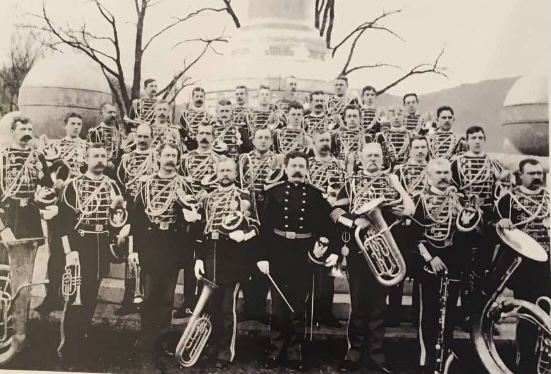 West Point Band around 1900 under the command of Teacher of Music George Essikge.
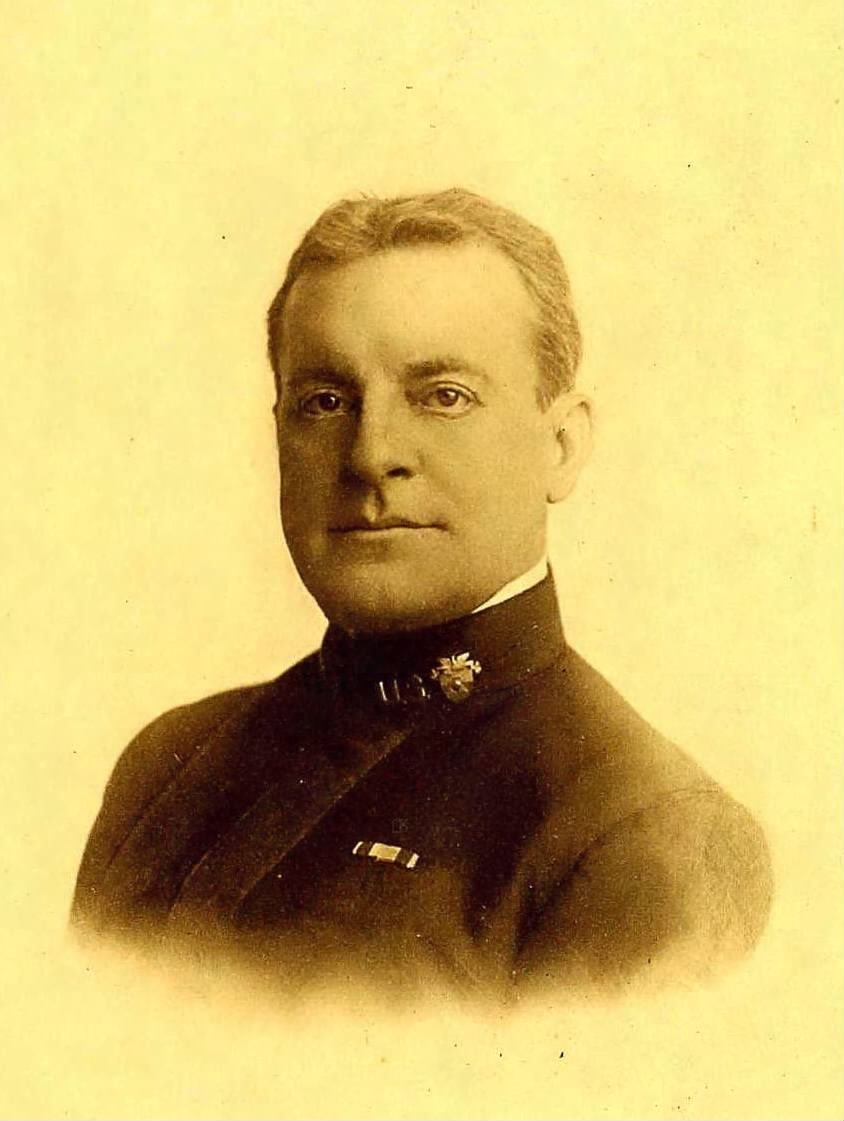 TM Philip Egner, leader of the West Point Band from 1909 to 1934.
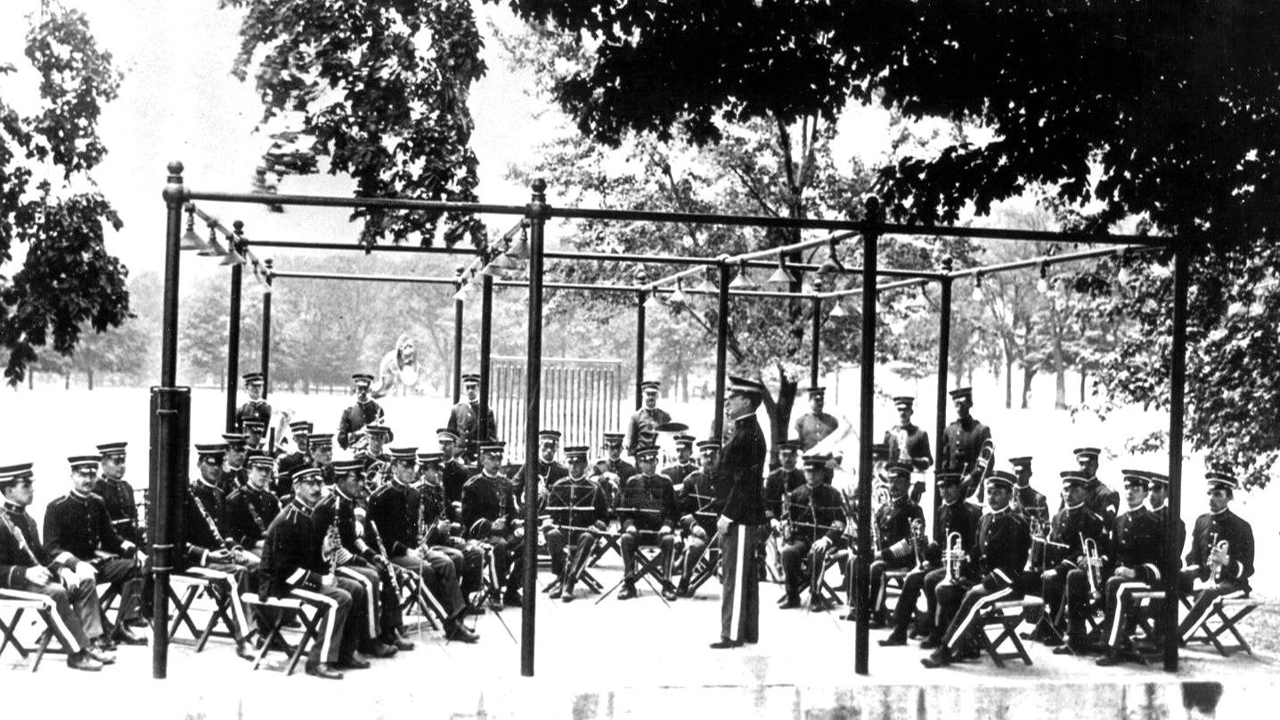 Teacher of Music Philip Egner conducting the band at the Superintendents Quarters in 1914.
 -
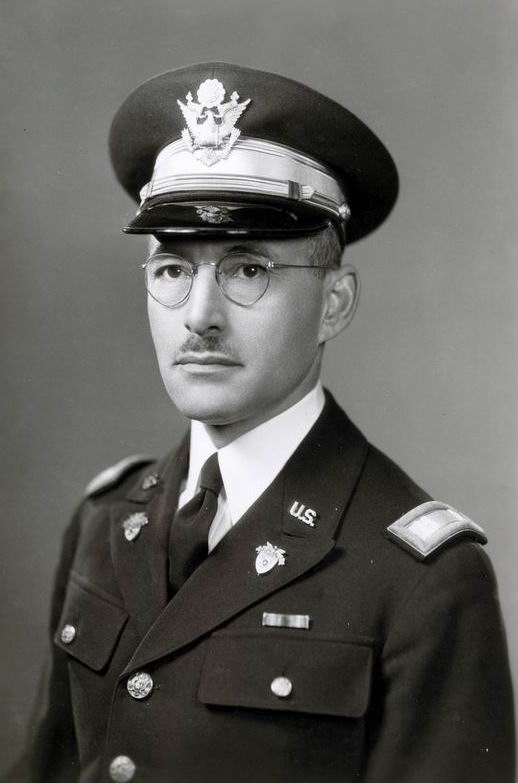 Francis Resta, Teacher of Music at West Point (1934-1957)
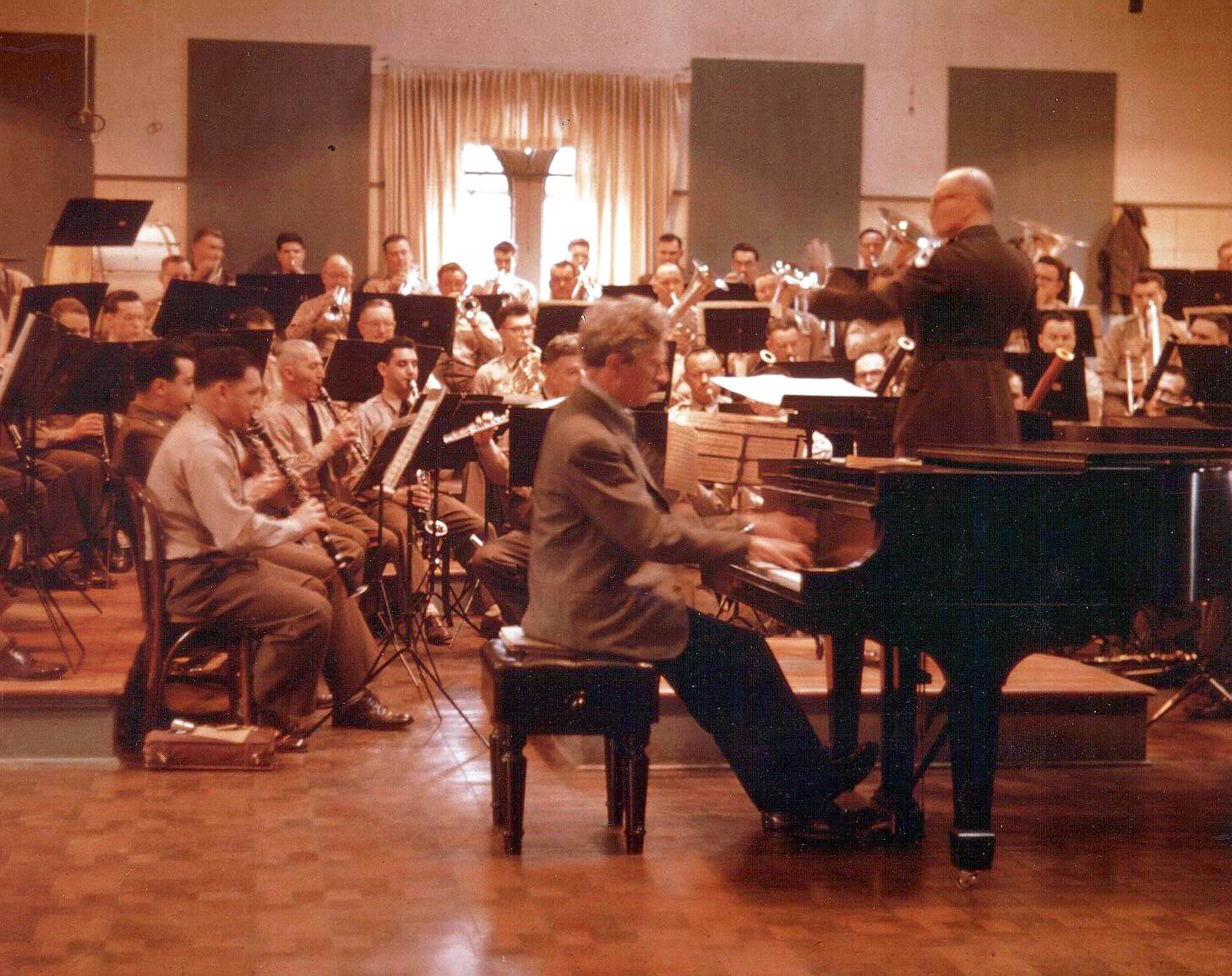 Percy Grainger in rehearsal with the West Point Band, 1951.Lt. Colonel Francis Resta was a legendary figure who served as the Commander and Teacher of Music for the West Point Band following Philip Egner from 1934 to 1957. Resta is known for his transformation of the band from a traditional military ensemble into a world-class, art music focused powerhouse.Born in Italy, Resta immigrated to the United States as a child, studied music at the Juilliard Institute of Musical Arts, and joined the U.S. Army during World War I. During his early military service, he (along with his older brother “Rocco”) became friends with famed Australian-American composer Percy Grainger during their service in the Army Band at Fort Hamilton. This lifelong friendship later heavily influenced the repertoire and prestige of the West Point Band. Because of Resta’s friendship, Percy Grainger frequently visited the academy, utilizing the highly skilled West Point Band as his personal laboratory to conduct the very first readings and rehearsals of many of his iconic wind band compositions.Resta’s most enduring legacy is the historic commissioning program he developed in 1952 to celebrate West Point’s 150th anniversary. He challenged prominent global composers to write original masterworks specifically for wind bands. This project single-handedly yielded 13 major works that revolutionized modern wind literature, including Morton Gould’s masterpiece West Point Symphony for Band and Darius Milhaud’s West Point Suite. Other notable works written for the Sesquicentennial are: Charles Cushing’s Angel Camp, Roy Harris’ Symphony for Band, William Grant Still’s To You, America, and Henry Cowell’s Fantasie.Somehow, through this already packed performance schedule, the Band made a large number of movie appearances, recordings for television, live broadcasts on the radio, and also appeared on a number of live TV shows. From 1949-1953, the Band could be heard anywhere and everywhere around America. The hit Hollywood film “The Long Gray Line” proudly featured the band during its opening week; both in the movie’s New York City opening day parade and with recorded music for the Paramount Theater showings.Resta also left an indelible mark on West Point graduation tradition by composing “100 Days ’til June” in 1938 as the overture to the academy’s annual 100th Night Show – an annual West Point tradition marking the final 100 days (or nights) before a cadet class graduates, featuring a banquet and a live show celebrating their four-year experience. That same year, Resta officially integrated the song into the West Point Graduation March. The march is a medley of West Point musical themes and snapshots. It is a tradition that the band still performs today as they counter-march in front of the Corps of Cadets the Graduation Review.
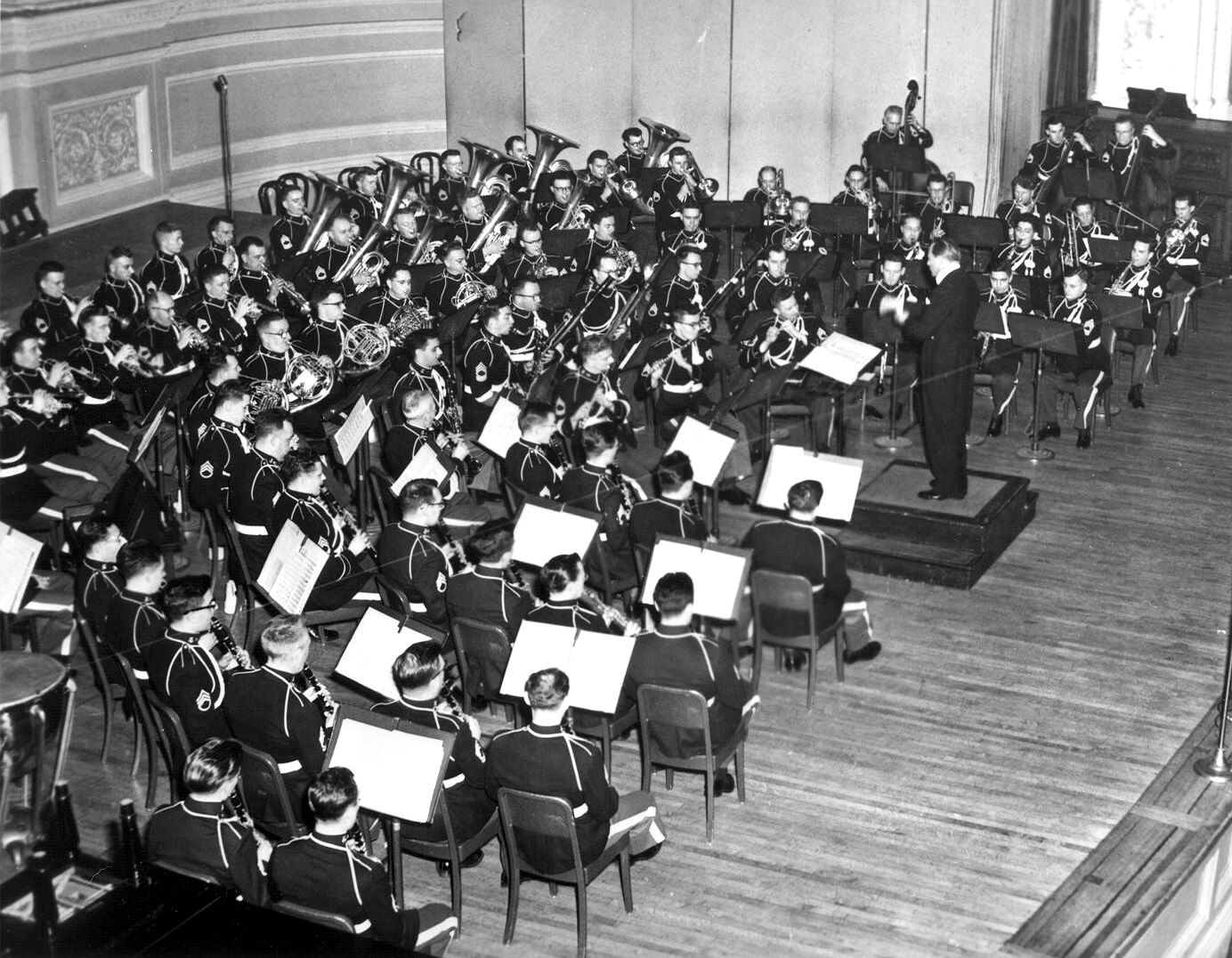 1952 Sesquicentennial Concert Series at Carnegie Hall, New York City.
 -
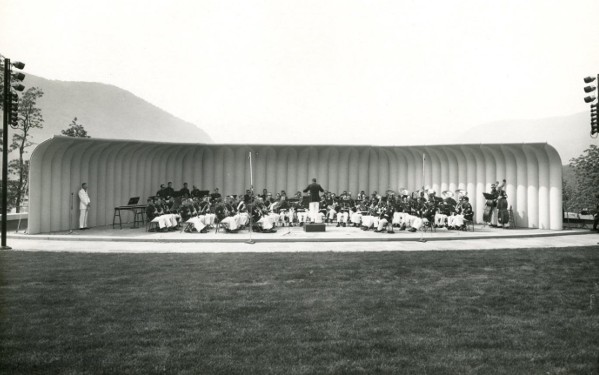 West Point Band under the direction of TM Schempf at Trophy Point, June 1966.
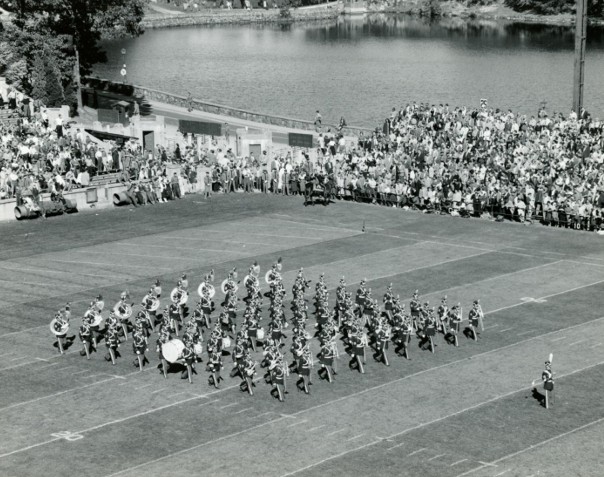 USMA Band at Michie Stadium, West Point. September 1957, the first documented band half-time performance.
William H. Schempf became the 13th and final Teacher of Music at the United States Military Academy in 1957, taking the baton from Francis Resta soon after his farewell concert held on April 21st. Schempf was a graduate of the University of Wisconsin and the Eastman school of Music, a World War II veteran serving as a Meteorology Officer in the U.S. Army Air Corps, and Head of the Music Department at Lehigh University from 1947 until his appointment to West Point in 1957.
During his first year as Teacher of Music, TM Schempf established a more permanent location on Trophy Point for the Summer Concert Series, advocating for the construction of the present-day stage. He was also the first commander to organize Half-time band performances during football games, its first in September of 1957. In the Fall of that year, the band performed an original Half-time symphony for President Dwight Eisenhower.
Over the years, the Band played for many dignified occasions which were always interesting and eventful; for a review honoring Her Majesty The Queen of England, His Royal Highness The Prince Philip Duke of Edinburgh, a 1958 visit of the Prime Minister of Canada, and several banquets for The Military Orders of World Wars.
In May, 1964, the Band and Field Music participated, along with hundreds of others, in the New York Worlds Fair. Later in the same year, William Steinberg, conductor of the Pittsburgh Symphony and guest conductor of the New York Philharmonic invited the Band to join the New York Philharmonic in three subscription concerts performing the Symphonie Funèbre et Triomphale by Hector Berlioz. Steinberg visited West Point on one occasion and the Band had one rehearsal in New York. “Berlioz would have loved it,” wrote Schempf. That same year, the band also performed with Arthur Fiedler and the Metropolitan Opera Orchestra.
During this period, the West Point Band maintained its rigorous schedule of parades, ceremonies, concerts, and off-post commitments. The Marching Band and Field Music continued their routine cadet responsibilities, providing music for daily formations and military traditions such as Reveille, meal formations, Retreat, Tattoo, and Taps. Additionally, the band dedicated considerable time each March to the “100th Night Show.” This cadet-led and scripted musical, which dates back to the early 20th century and continues today, required hours of custom musical arrangements and a large accompanying pit orchestra.The years from 1964 to 1968 were exceptionally busy for the ensemble. The band performed for the New York City funeral ceremonies and processions of General Douglas MacArthur, President Herbert Hoover, and President John F. Kennedy. In 1965, they supported the inaugural parade for President Lyndon B. Johnson and performed at the Midwest Band Clinic in Chicago. Two years later, in 1967, the band provided funeral honors for astronaut LTC Edward H. White II at the West Point Cemetery and performed for the Joint Chiefs of Staff at the Waldorf-Astoria in New York City.By the late 1960s, the band’s roster averaged more than 190 members—exceeding its authorized strength by 10 to 15 personnel, a peak enrollment never reached again. At the same time, the ensemble began adapting to the evolving musical preferences of the cadets. In 1969, Bandmaster William H. Schempf authorized the creation of early jazz and rock-styled groups. These experimental ensembles quickly evolved into two distinct units: a rock group called The New Beginnings (the predecessor to today’s Benny Havens Band) and The Stage Band (which later became the renowned Jazz Knights).The institutional structure of the band shifted significantly by the early 1970s. The traditional “Teacher of Music” position came under heavy administrative review, and on August 1, 1971, the West Point Band was placed under the command of a regular Army Bands commissioned officer. Schempf was reassigned as a “Senior Lecturer in Music,” and the Teacher of Music position was phased out.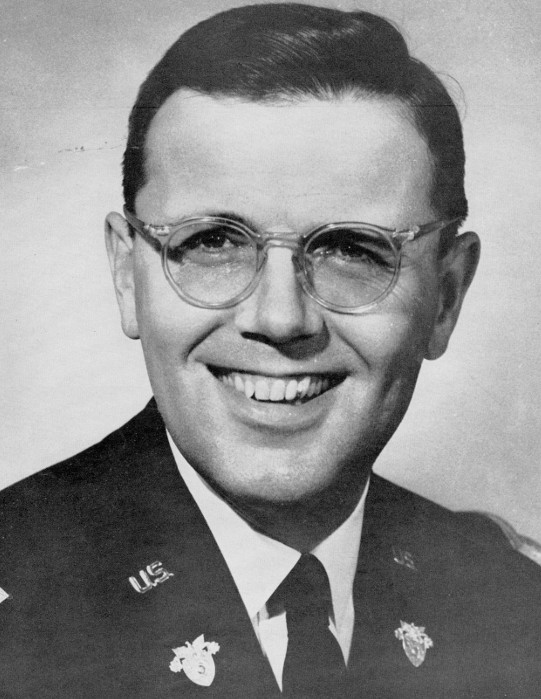 TM Schempf in 1962.
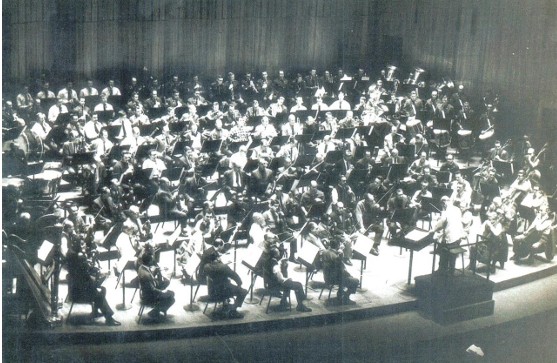 West Point Band performs with the New York Philharmonic in 1964.
 -
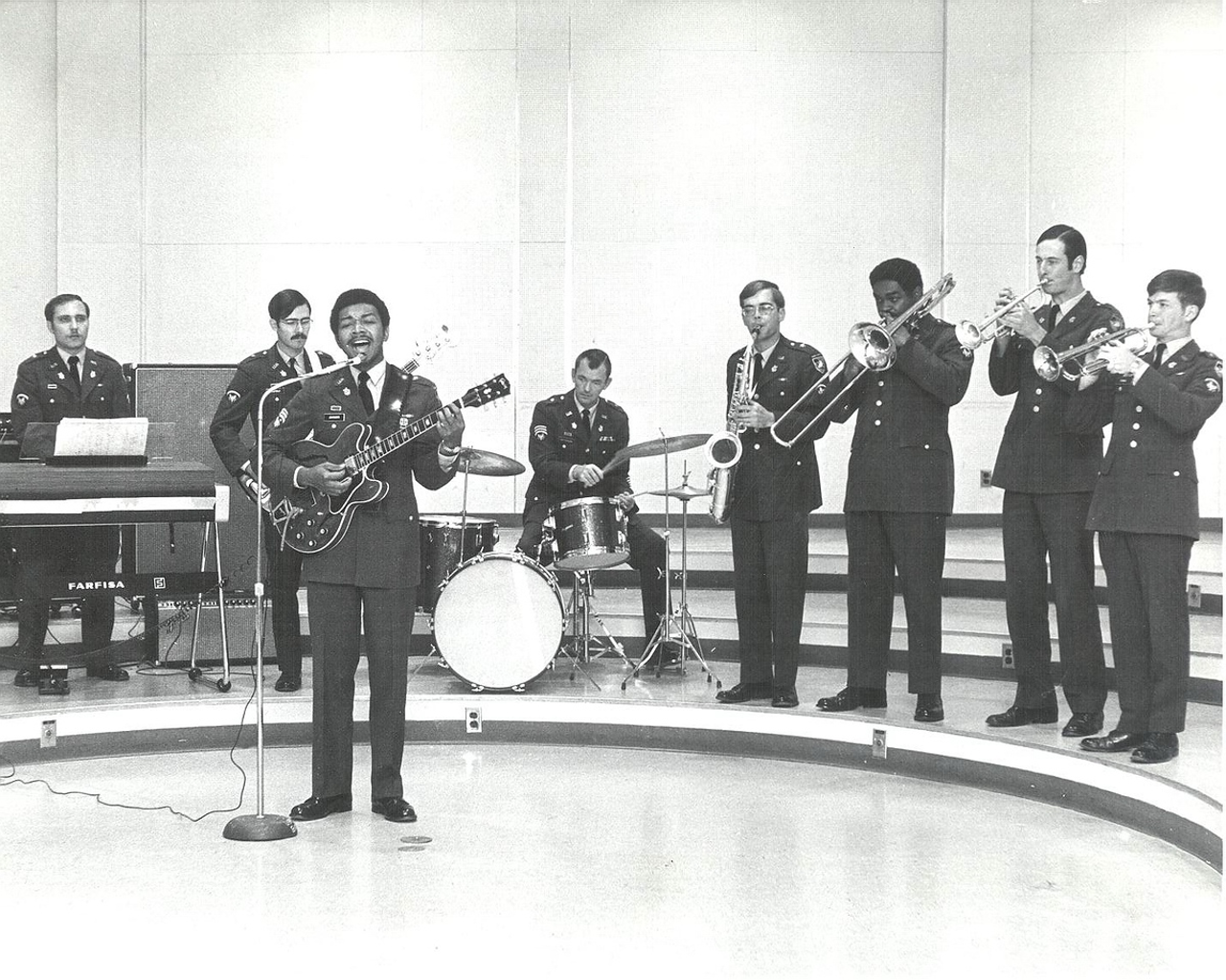 The West Point Band’s rock ensemble, “The Beginnings” in 1972. This group would serve as the prototype for the Jazz Knights (serving the Academy from 1972 to 2014) and also the current West Point popular music group, “Benny Haven’s Band.”
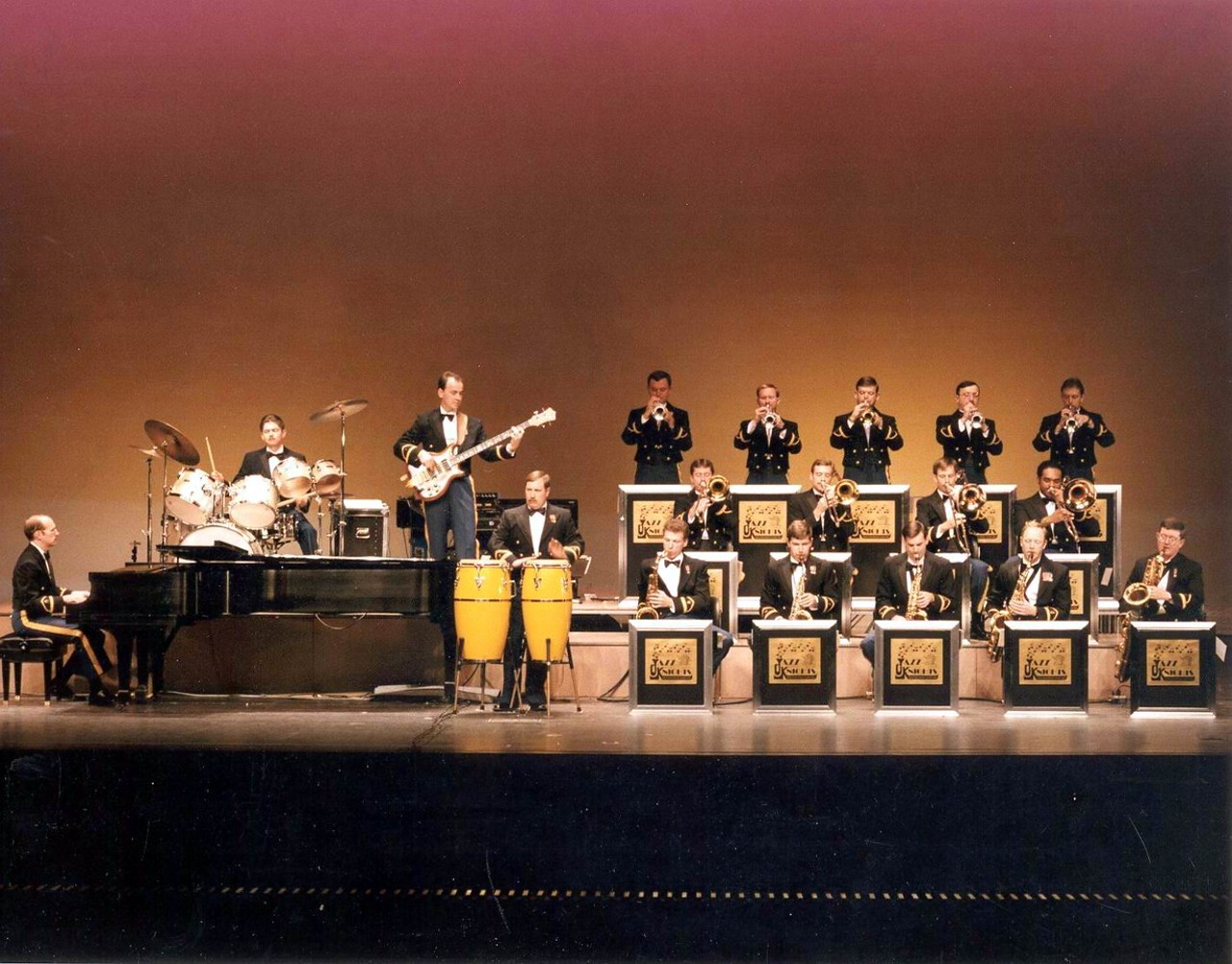 The Jazz Knights jazz ensemble in 1986.
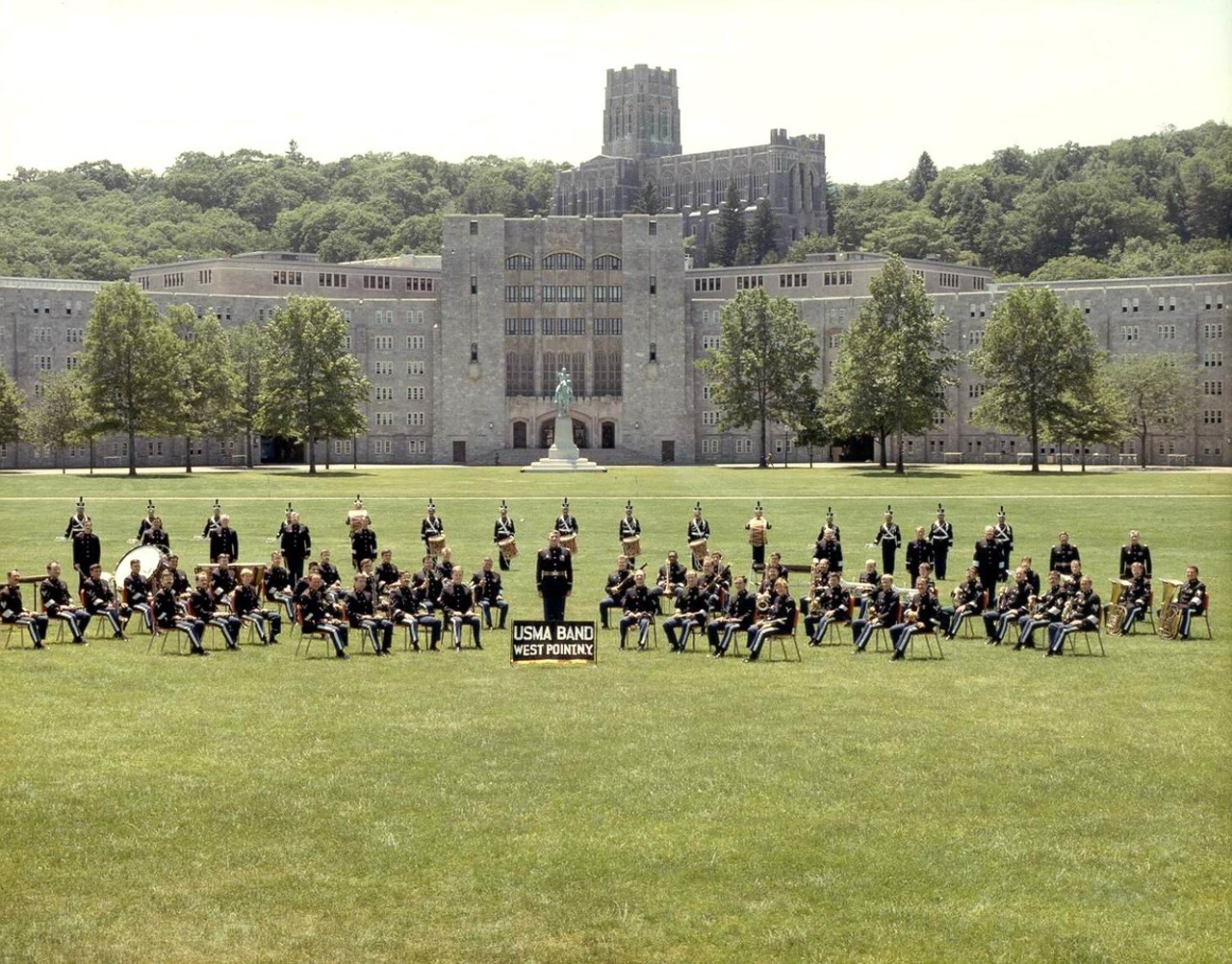 West Point Band and Field Music in 1987.
Following the end of the Vietnam War, the United States Army—and with it the West Point Band—entered a period of transition and restructuring. The elimination of the Teacher of Music position marked a significant institutional shift, leaving the Band to operate under new organizational conditions. Personnel reductions in the mid-1970s further reshaped the ensemble, reducing its strength to roughly half of its peak size. Despite these constraints, the Band was still tasked with maintaining an exceptionally demanding operational tempo, supporting approximately 1,400 missions annually.
Leadership continuity also became more fluid during this era, as commanding officers of the Band began rotating more frequently, often serving no more than three years. Even amid these structural challenges, the latter half of the decade proved to be a period of intense activity, particularly in support of the nation’s Bicentennial celebrations in 1976. The Band played a prominent role in commemorative events across the country, including a notable performance in St. Louis beneath the Gateway Arch, as well as numerous concerts and parades nationwide that highlighted both military tradition and national pride.
The Band’s visibility extended into popular media as well. In 1977, it was featured in the motion picture MacArthur, which chronicled the life of General Douglas MacArthur and was framed by his reflections on his formative years at West Point. Through this appearance, the Band helped reinforce the Academy’s enduring connection to American military heritage.
Ceremonial responsibilities remained a cornerstone of the Band’s mission. During this period and in subsequent decades, the Band participated in several Presidential Inaugural Parades, including those for President Jimmy Carter in 1977, President Ronald Reagan in 1981, and later President George W. Bush in 2001—continuing a long-standing tradition of supporting national events of historic significance.
Musically, the era also saw the evolution of new performance elements within the organization. It was during this time that The Jazz Knights emerged as a fully established and independent popular music ensemble within the Band. Expanding the group’s artistic reach, the Jazz Knights performed extensively both for the West Point community and audiences across the country, it even shared the stage with the renowned Duke Ellington Orchestra—underscoring the Band’s versatility and contemporary relevance.
During the 1980’s, the band had many highlights. They performed again at Carnegie Hall under famous composer Morton Gould, for the kings of Thailand and Sweden, at the Tanglewood festival, and with the NY Philharmonic under Zubin Mehta. In 1984, it accompanied the Army football team to Tokyo, Japan, for the Mirage Bowl—marking what is recognized as the Band’s first documented international appearance in its history. This milestone reflected both the global reach of the U.S. Army and the expanding cultural role of the Band.
In 1991, the Band was featured in the PBS special presentation The Civil War, a landmark documentary produced by Ken Burns. Contributing to the series’ acclaimed soundtrack, the Band helped bring the music of the Civil War era to modern audiences, further cementing its role as both a ceremonial and educational institution preserving America’s musical and military traditions.
In the decade following the attacks of September 11, 2001, the West Point Band played a vital role in commemorating the nation’s loss, fostering patriotism, and supporting the American people through music. Just nine days after the attacks, on September 20, 2001, the band joined Connecticut Governor John G. Rowland for a state memorial service honoring the victims. The Concert Band also performed ceremonial music at New York City’s Park Avenue Armory for President George W. Bush and civic leaders during a memorial observance.
The following year marked the 200th anniversary of the United States Military Academy. As part of the Bicentennial celebration, the Band gave a landmark performance at Carnegie Hall in New York City—its third appearance at the historic venue. The concert featured several newly commissioned works and was attended by distinguished guests, including Army Chief of Staff GEN Eric Shinseki, Secretary of the Army Thomas E. White, and renowned journalist Walter Cronkite. Cronkite further honored the occasion by serving as guest conductor for Sousa’s The Washington Post March.
The 2000s also brought a renewed emphasis on strengthening international partnerships through music. In 2004, the Regimental Brass Quintet traveled to Oslo, Norway, where it performed with the Royal Norwegian Armed Forces Band. During the visit, the ensemble presented master classes and a recital at the Oslo Central Conservatory, as well as a master class for His Majesty’s Royal Guard Band. In the years that followed, the Band continued to support U.S. diplomatic outreach by sending musicians to the People’s Republic of China, the United Kingdom, Germany, and Japan, while also hosting military bands and musicians from Germany, Japan, and Brazil.
The Band likewise continued its longstanding tradition of providing music for significant military ceremonies. It performed at the West Point funeral services of General William C. Westmoreland in 2005 and General H. Norman Schwarzkopf in 2012. Westmoreland, a member of the Class of 1936, commanded U.S. forces in Vietnam from 1964 to 1968, while Schwarzkopf, Class of 1956, led coalition forces during Operations Desert Shield and Desert Storm in 1991. Both were among West Point’s most distinguished graduates.
Throughout the decade, the Band also strengthened its relationship with New York City’s premier cultural institutions. In 2008, it joined the New York Philharmonic for two performances of Musical Fireworks at Avery Fisher Hall under the direction of LTC Timothy J. Holtan and Bramwell Tovey. Later that year, the Concert Band welcomed Phil Smith, the Philharmonic’s celebrated Principal Trumpet, as a featured guest artist at Trophy Point. In 2009, the Band performed the first-ever National Anthem at the newly opened Yankee Stadium during its inaugural public event and exhibition game, where the New York Yankees defeated the Chicago Cubs 7–4 before a sellout crowd. Seven years later, in 2016, the Marching Band appeared in New York City’s 90th Macy’s Thanksgiving Day Parade, performing in a nationally televised segment commemorating the unit’s 200th anniversary before an estimated audience of 22.3 million viewers.
In recent years, the Band’s support of American diplomacy has reached new heights through its repeated appearances at the United Nations. In 2019, the Benny Havens Band performed at the U.S. Mission to the United Nations’ Independence Day celebration, hosted by Acting U.S. Ambassador Jonathan R. Cohen. More than 300 delegates representing 170 nations attended the annual event, where the ensemble helped foster goodwill and international partnership through music.
In 2023, a joint ensemble of musicians from the Concert Band, Benny Havens Band, Field Music, and the Cadet Glee Club presented a special performance for the United Nations General Assembly. Requested and partially funded by the U.S. Mission to the United Nations, the concert showcased America’s cultural heritage and military excellence to an international audience. U.S. Ambassador Linda Thomas-Greenfield personally introduced the ensemble and met with senior Academy leaders following the performance. The concert was widely praised by attendees, prompted expressions of appreciation from diplomats representing nations around the world.
As it enters its third century of service, the West Point Band remains steadfast in its mission to support the United States Military Academy, the Army, and the nation through musical excellence. While advances in technology, evolving audiences, and changing global responsibilities will continue to shape its work, the Band’s core purpose endures: to educate, train, and inspire, with professionalism and artistry. Building on more than two centuries of tradition, the musicians of the West Point Band stand prepared to meet the challenges of the future, preserving the legacy of those who came before.
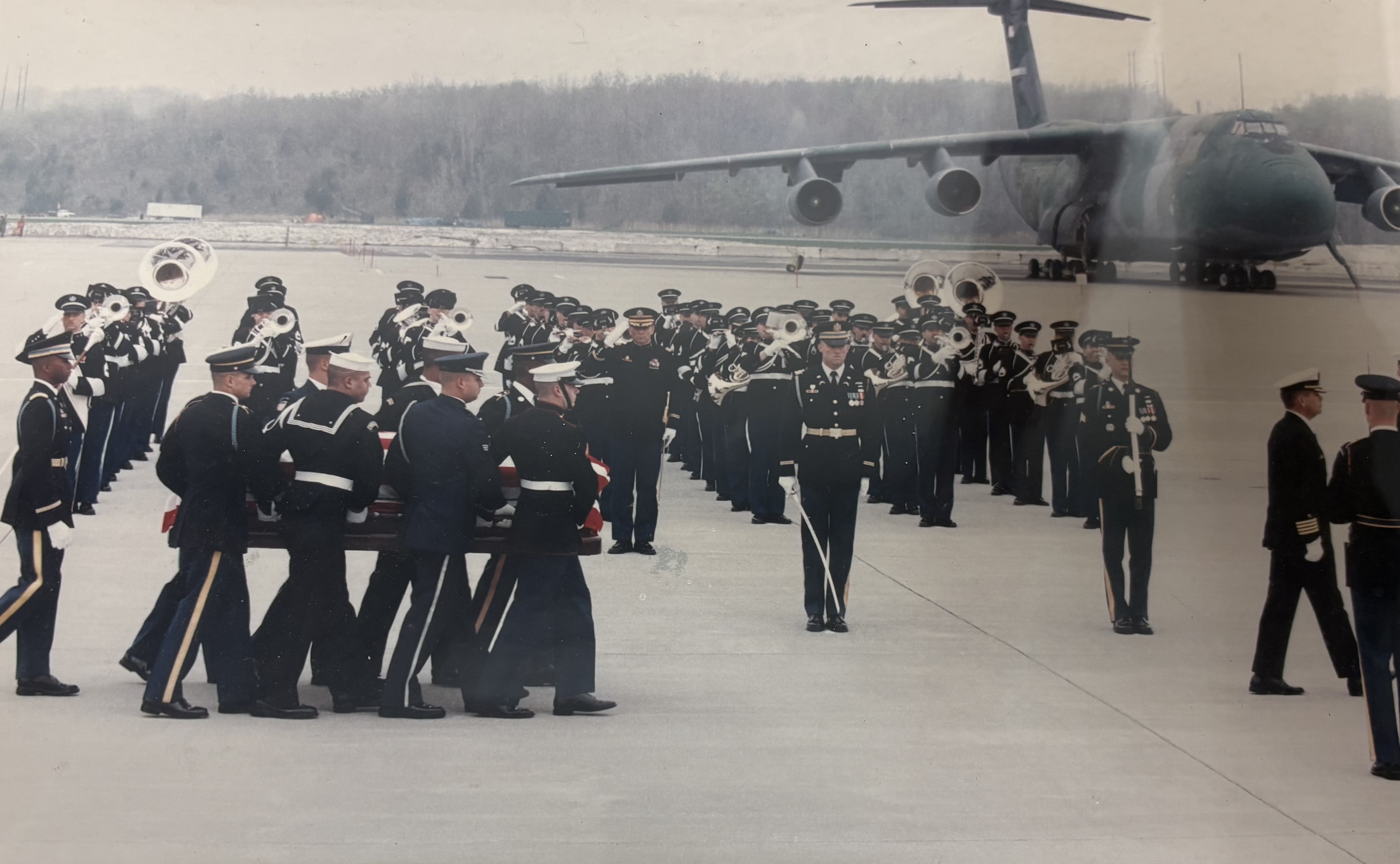 Band performs ceremonial music for President Nixon’s remains transfer at Stewart AFB, 1994.
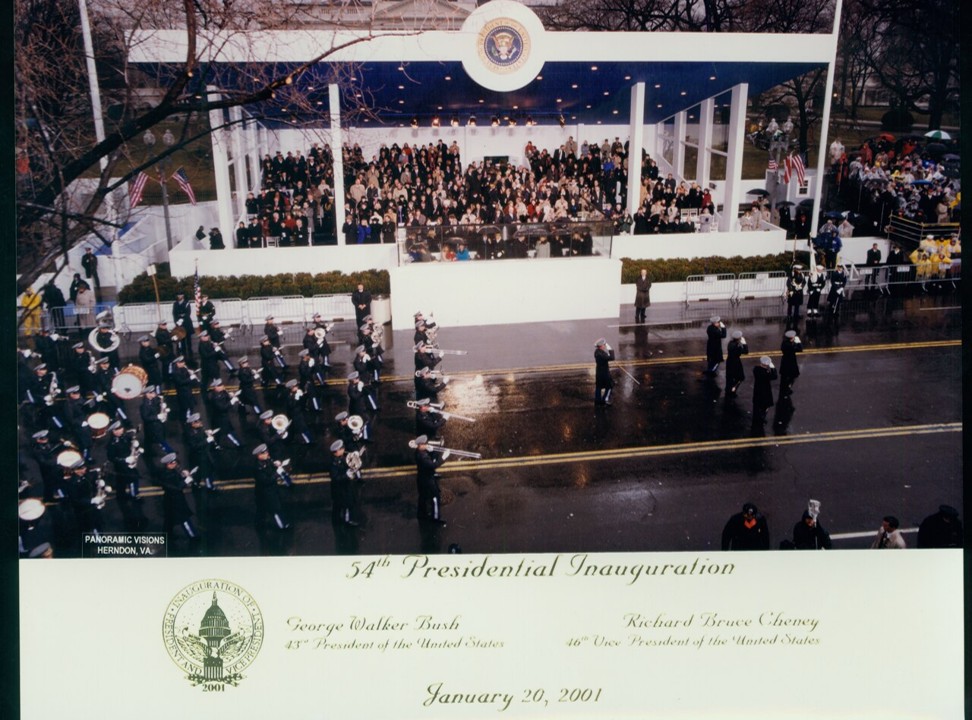 Inaugural Parade for President George W. Bush in 2001. This was most recent Inaugural Parade the band has participated in.
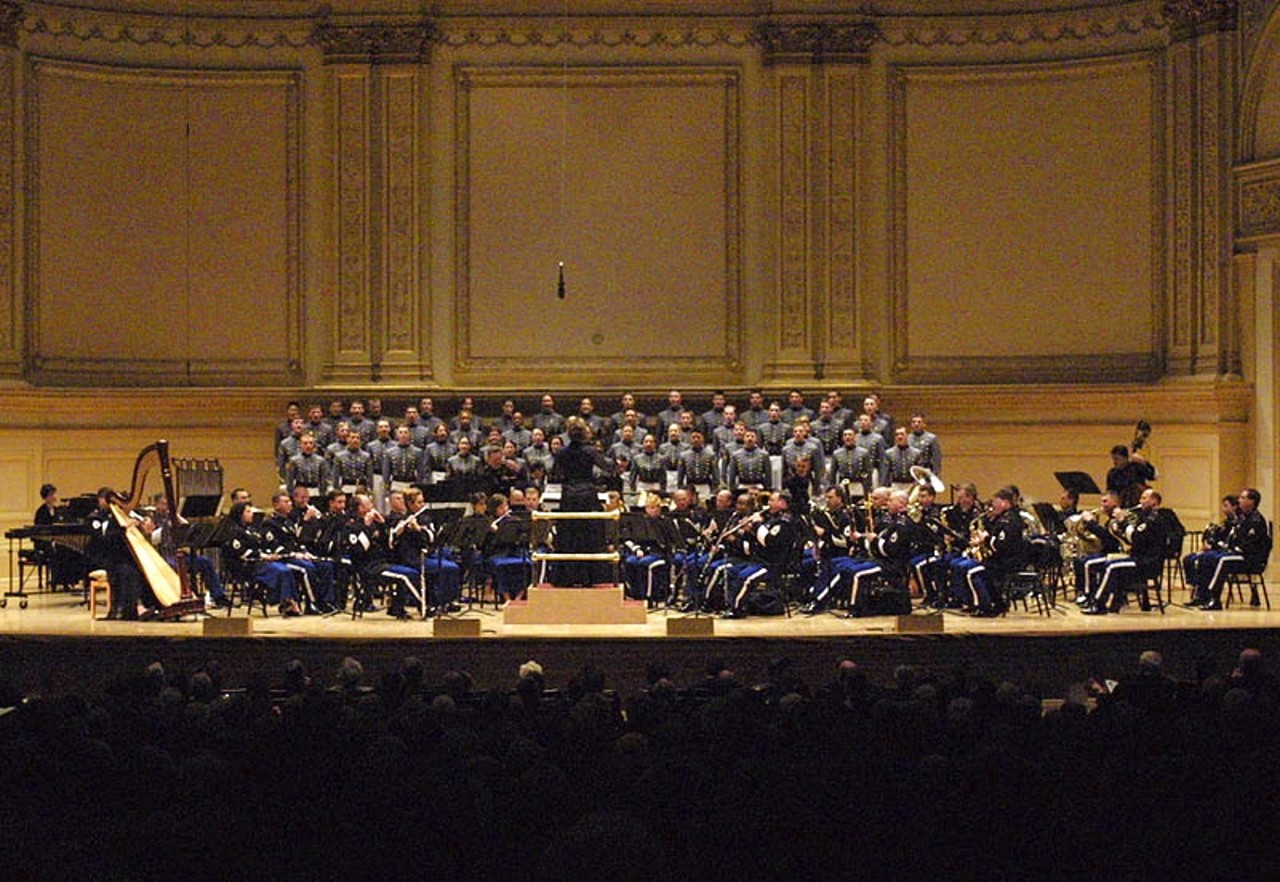 The West Point Band performing for the West Point Bicentennial Celebration Concert at Carnegie Hall, 2002.
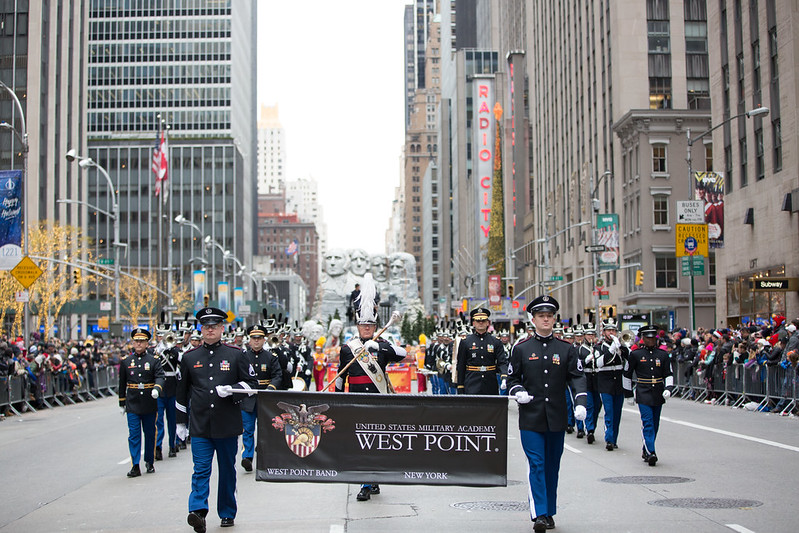 West Point Band marches in the 2016 Macys Thanksgiving Day Parade.
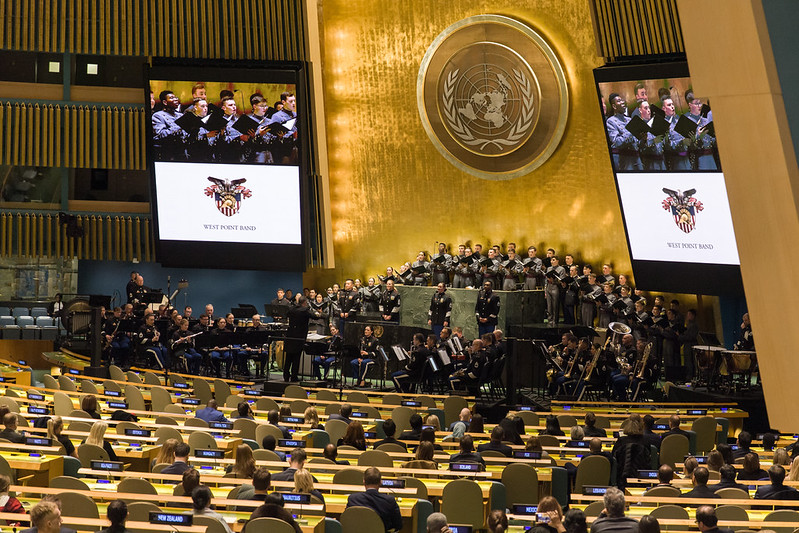 West Point Band and Cadet Glee Club performing for the UN General Assembly in 2023.
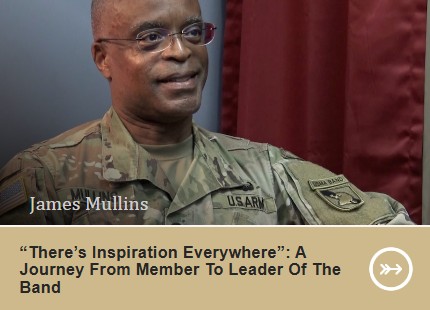
ORAL HISTORY
WEST POINT BAND HISTORY IN OUR OWN WORDS – INTERVIEWS FROM CURRENT AND PAST MEMBERS OF THE BAND
(Click a photo for the complete interview)
HISTORICAL TIMELINE
TRACK THE BIRTH AND DEVELOPMENT OF THE BAND – FROM ITS EARLY BEGINNINGS TO THE PRESENT DAY
June 14th, 1775
The U.S. Army is Born
The U.S. Army traces its beginning to June 14th, 1775, when the Second Continental Congress approved the formation of a continental army
July 4th, 1776
Declaration of Independence Signed
A nation is born
January 20th, 1778
Continental Army Arrives at West Point
The 6th Connecticut Regiment under the command of General Samuel Holden Parson crosses an icy Hudson River with 800 officers and men, among them were 24 fifers and drummers
March 16th, 1802
United States Military Academy Established
Congress formally authorizes the establishment and funding of the school with the “Military Peace Establishment Act” of 1802, which President Jefferson signs on March 16th, 1802. The Academy official opened on July 4th, 1802.
April 15th, 1802
The Idea of a Band
With the establishment of the United States Military Academy in 1802 came an increased demand for military music. It needed fifers and drummers to drill the cadets and regulate their daily duties. On April 15, 1802, Jonathan Williams the first Superintendent of the United States military academy set down his desire to have a professional band at West Point with two Teachers of Music.
April 29th, 1812
The Company of Bombardiers, Sappers, and Miners established at West Point
Captain Alden Partridge‘s Company of Vermont Militia from Norwich, Vermont formed the core of The Company of Bombardiers, Sappers, and Miners at West Point. Four musicians were listed: Joseph Roberts, Eleazar Smith, Joab Young, and Silas A. Robinson (West Point’s first known Drum Major)
April 1st, 1816
Band Fully Staffed
Joseph Gardner Swift (3rd Superintendent of West Point from 1812–1814 and Chief of Engineers of the U.S. Army from 1812–1818) authorized the purchase of new melodic instruments. By 1816, the instruments and band uniforms ordered by Alden Partridge had arrived and musicians joined the band from the Army Band School at Governor’s Island
June 16th, 1817
Official Authorization
Band and Teacher of Music (TM) position is officially authorized by the Secretary of War. Richard Willis formally appointed to the position.
August 8th, 1820
Performance for John Quincy Adams
Willis and the band perform a special concert in New York City for Vice President John Q. Adams (later President) on board the ship “Nautilus.”
June 23rd, 1821
The Long March to Boston
The West Point Band accompanies the Corps of Cadets on the long march from Troy, NY to Boston, MA. Along the way, the band performs many concerts and even serenaded former President John Adams at his home in Quincy, MA.
September 6th, 1824
The Return of General Lafayette
Willis and the band perform for returning Revolutionary War hero, General Lafayette. The band greeted him off of Staten Island, Fort Lafayette, and New York Harbor. The band also supported many additional receptions and events for him.
November 6th, 1825
The Opening of the Erie Canal
West Point Band performs for the opening of the Erie Canal. Richard Willis composed “The Grand Canal March” to celebrate the occasion.
February 1st, 1830
Richard Willis Dies
The band’s first commander, Richard Willis dies suddenly. Buried at the West Point Cemetery. All academic exercises were suspended by order of Superintendent Sylvanus Thayer.
July 4th, 1842
A National Ceremony
To celebrate Independence Day, the band performs a concert at the ruins of Fort Putnam (at the top of modern-day Delafield Road). Summer concerts had been started under Richard Willis as early as 1817, also at Fort Putnam.
June 25th, 1862
President Lincoln Visits West Point
President Abraham Lincoln comes to Highland Falls and West Point to visit with General Winfield Scott. The band performed an after-midnight concert at the Cozzens Hotel in Highland Falls.
October 19th, 1866
An Official Title
The “Military Band” at West Point officially designated “The United States Military Academy Band” by an Act of Congress.
March 4th, 1873
President Grant’s Inaugural Parade
Band performs at the second Inaugural parade of President Ulysses Grant. This is the first documented inauguration that the band attended, however there is some proof that the band also performed at his first inaugural in 1868.
July 4th, 1876
The Centennial Exposition in Philadelphia
Band performed for the first World’s Fair held in Philadelphia.
October 10th, 1877
Funeral of General Custer
Band performed for the official internment of famed General Custer at the West Point Cemetery.
March 7th, 1889
President Harrison’s Inaugural Parade
April 30th, 1889
George Washington Centennial Parade
Band marches in the George Washington Centennial Parade in New York City. Parade involved more than 46,000 marchers and represented all 13 original colonies. President Harrison was the chief reviewing officer.
February 11th, 1891
Funeral Parade of General Sherman
Band participated in the funeral parade of General Tecumsah Sherman, held in New York City.
August 17th, 1893
The Chicago Exposition
Band performs at the Chicago Exposition, or World’s Fair. Also performed a concert tour in the greater Chicago area.
March 4th, 1901
President McKinley’s Inaugural Parade
April 30th, 1904
The St. Louis Centennial Exposition
March 4, 1905
Band Performs for President Theodore Roosevelt’s Inaugural Parade
March 4th, 1909
Band Performs for President Taft’s Inaugural Parade
March 4th, 1913
Band Performs for President Woodrow Wilson’s Inaugural Parade
March 4th, 1917
Band Performs for President Wilson’s Second Inaugural Parade
September 9th, 1924
General John Pershing’s Retirement
Band provided music for General Pershing’s retirement dinner in New York City
December 15th, 1925
Opening of Madison Square Garden
Band performs for the opening ceremonies of the original Madison Square Garden in New York City.
1927
The Composition of “The Official West Point March”
Superintendent Winans orders Lieutenant Philip Egner to compose an official march for the U.S. Military Academy
June 13th, 1927
Charles Lindburgh’s Return to America
Band performs for the heroic return of famed pilot Charles Lindburgh after his historic flight across the Atlantic Ocean.
March 3rd, 1931
Official National Anthem
The Star-Spangled Banner officially becomes the National Anthem.
March 4th, 1933
President Franklin D. Roosevelt’s Inaugural Parade
May 5th, 1935
Edwin Franko Goldman Conducts the Band
Famed band leader and composer, Edwin Franko Goldman conducts the West Point Band in a concert featuring; Shenandoah, Tannhauser, On Parade March, and Grand March University.
April 25th, 1940
Percy Grainger’s “Hill Song #2”
Band performs the premier of “Hill Song #2” under the direction of the composer.
January 25th, 1942
Henry Cowell Conducts the Band
Famed composer Henry Cowell conducts the Band in a program of his own works. He was also featured as a piano soloist. Premiered the “Concerto Piccolo for Piano and Band” and “Vox Humana.”
April 22nd, 1945
Percy Grainger Solos with the Band
Second half of the program was all Grainger music, including “Lincolnshire Posey.” Under the direction of Lt Colonel Francis Resta.
1945
“Sounds from the Hudson”
The Band under the direction of TM Francis Resta, records music for the Warner Brothers film, “Sounds from the Hudson”
October 9th, 1946
Meritorious Unit Citation Award
Band awarded the Meritorious Unit Citation award for its service during the FDR funeral in Hyde Park, NY.
January 20th, 1949
Band Performs for President Truman’s Second Inaugural Parade
February 21st, 1951
Band’s First Performance at Carnegie Hall
Band performs in Carnegie Hall for the 12th American Music Festival
December 15, 1951
Cushing’s “Angel Camp”
Band premiers “Angel Camp” by famed composer Charles Cushing. It was composed for the 1952 USMA Sesquicentennial.
January 5th, 1952
Band Performs for USMA Sesquicentennial Series
Band performs in Carnegie Hall with the assistance of Cadet Glee Club. The concert featured works by Sibelius, Gounod, Puccini and Grieg. The band performed multiple concerts throughout 1952, premiering new works for band by Charles Cushing, Henry Cowell, Robert Dvorak, William Grant Still, and Darius Milhaud.
January 20th, 1953
Band Performs for President Eisenhower’s Inaugural Parade
February 25th, 1954
20th Annual American Band Association Convention at West Point
Band hosts and performs for the 20th ABA Convention, hosted at West Point and nearby Newburgh Free Academy. Guest conductors included; Leonard Falcone, Thomas Darcy, Chester Whiting, Karl King, Henry Fillmore, Edwin F. Goldman, Mark Hindsley, and many more.
January 1st, 1955
Tournament of Roses Parade Appearance
Band marches in the Rose Bowl Parade. West Point Band was the first Army “Special Band” to take part in the parade. The band remained in California for seven days and performed concerts in the greater Los Angeles area. General Omar Bradley was the Grand Marshall for the parade.
September 10th, 1957
Review for Vice President Nixon
During his visit to West Point, the Corps of Cadets and the West Point Band performed a Pass-in-Review ceremony for the Vice President.
November 2nd, 1957
Review for President Eisenhower
Band supports a honorary Pass-in-Review parade for President Eisenhower during his visit to West Point. Eisenhower also attended the football game, where the band performed a serenade based upon “Hail to the Chief”
January 20th, 1961
Band Performs for President John F. Kennedy’s Inaugural Parade
April 5th, 1961
Leopold Stokowski Visits the Band
Leopold Stokowski, famous conductor, celebrates his 80th birthday by visiting West Point and rehearsing the Concert Band in TM Schempf’s arrangement of Tschaikovsky’s 4th symphony.
May 23rd, 1963
Review for General MacArthur
Band performs a Pass-in-Review to honor the service of General Douglas MacArthur.
May 17th, 1964
The New York World’s Fair
Band performs a concert at the New York World’s Fair at the “Singer Bowl”
December 15th, 1965
The Midwest Band Clinic
Band performs for the first time at the Midwest Band Clinic in Chicago.
August 19th, 1966
A Performance for President Johnson
The Band plays for President and Mrs. Johnson in Walden, NY. Due to some delay in his arrival, the band also played and sang “The Yellow Rose of Texas” for the crowd.
January, 15th, 1967
Band Performs for the Funeral of Astronaut Ed. H. White
May 16th, 1970
The “Ed Sullivan Show”
The West Point Band and Glee Club appear on an episode of the “Ed Sullivan Show” filmed in New York City.
November 5th, 1970
The Macy’s Thanksgiving Day Parade
In its first appearance, the West Point Band marched in New York City’s Macy’s Thanksgiving Day Parade.
March 15th, 1972
Stage Band Formed
The “Stage Band” was a group comprised of 17 musicians, that performed a wide-range of jazz and popular selections. One of the first official groups of its type, it became the prototype of the later “Jazz Knights” and “Benny Havens Band” popular music groups
January 25th, 1973
Band Performs President Nixon’s Inaugural Parade
July 8th, 1976
Band Performs for Queen Elizabeth II
During her visit to New York City.
January 20th, 1977
Band Performs for President Carter’s Inaugural Parade
January 20th, 1981
Band Performs for President Reagan’s Inaugural Parade
October 15th, 1981
Band Performs for the King and Queen of Thailand
October 27th, 1982
Carnegie Hall with Morton Gould
The West Point Band perform with the American Symphony Orchestra and Morton Gould in Carnegie Hall. The program included marches, a field music show, and Gould’s Symphony for Band.
November 9th, 1982
Band Performs for the King of Sweden in New York City
November 15th, 1982
Band Performs at Lincoln Center
Band performs at Lincoln Center with The Benny Goodman Quartet and Phyllis Newman
August 18th, 1983
Band Performs Tchaikovsky’s 1812 Overture with the New York Philharmonic and Zubin Mehta
November 12th, 1984
Band at the “Mirage Bowl”
The Band and Corps of Cadets invited to the Mirage Bowl in Tokyo, Japan. The was the first overseas appearance of the band in its 197-year history. The Army football team played Montana with the Band performing at halftime.
October 28th, 1987
Band Performs a Pass-in-Review for President Ronald Reagan
August 17th, 1991
“Music of the Civil War” for P.B.S.
West Point Band records music for the PBS special presentation of “Music of the Civil War.” Many stars and other performing groups were featured on this show. Produced by Jim Brown and Ken Burns.
August 22nd, 1992
Band at Lincoln Center
To celebrate the 500th anniversary of Columbus’ voyage, the West Point Band with the U.S. Coast Guard Band and the Goldman Band premiered Henry Brant’s work “500” at Lincoln Center Plaza.
October 3rd, 1992
Francis Johnson Day
In Philadelphia, the West Point Band performed in honor to the 18th century African-American composer and keyed bugle virtuoso.
September 18th, 1998
“Taps” Sounded at the United Nations
To honor the fallen men and women lost in the name of peacekeeping, Taps was sounded by a member of the Hellcats field music group after the reading of the names of the deceased.
May 19th, 1999
Dedication of the Band Building
In a ceremony to honor former bandmaster Captain Philip Egner, the band (with Commandant of Cadets General Abizaid) officially dedicated the building Egner Hall.
September 7th, 2000
United Nations 55th Anniversary
The West Point Band performed for President William Clinton and United Nations dignitaries at the New York Metropolitan Museum of Art to honor 55 years of the United Nations.
September 20th, 2001
“United We Stand” 9/11 Memorial
Just nine days after the 9/11 attacks, the West Point Band with Connecticut Governor John Rowland held a state ceremony in remembrance of those lost.
November 11th, 2001
Performance for President George W. Bush
The Band performed ceremonial music for a Veteran’s Breakfast held at the Park Armory in New York City. The President of the United States, George W. Bush, was the guest speaker.
August 30th, 2003
The Band of the Grenadier Guards
The Band performed in a joint performance with The Band of the Grenadier Guards, the Queen of England’s band at Trophy Point.
July 23rd, 2005
General William Westmoreland’s Funeral
The Band performed General Westmoreland funeral, former commander of U.S. Forces in Vietnam.
November 11th, 2006
National Purple Heart Hall of Honor
The West Point Band performed for the National Purple Heart Hall of Honor dedication ceremony in New Windsor, NY. New York Governor George Pataki, Senator Hillary Clinton, and Senator William Larkin were in attendance.
July 4th, 2008
Band Performs at Avery Fisher Hall
The West Point Band performed twice with the New York Philharmonic at Avery Fisher Hall for a program entitled, “Musical Fireworks.” LTC Timothy Holtan and Bramwell Tovey conducted the band and orchestra.
April 3rd, 2009
New Yankee Stadium
The West Point Band performed the first ever National Anthem at the newly completed Yankee Stadium. The game was the first exhibition game and first open to the public. The New York Yankees played the Chicago Cubs.
July 2nd, 2010
West Point Band at Avery Fisher Hall
The West Point Band performed alongside the New York Philharmonic at Avery Fisher Hall as part of their Summertime Classics Series.
February 1st, 2013
Grand Central Terminal Centennial Celebration
The West Point Band Brass and Percussion represented the United States Military Academy at the 100th Anniversary of the Grand Central Terminal in New York City. New York City Mayor Michael Bloomberg was in attendance.
November 24th, 2016
The 90th Macy’s Thanksgiving Day Parade
The West Point Band performed on the red carpet, featured for a three-minute segment in honor of the Band’s 200th anniversary.
October 29th, 2017
West Point Band’s Bicentennial
The West Point Band celebrated it’s 200th anniversary with a performance at David Geffen Hall at Lincoln Center.
February 27th, 2023
Concert for the United Nations General Assembly
A joint ensemble consisting of the Concert Band, Benny Havens Band, and Cadet Glee Club performed for the United Nations General Assembly in New York City.